











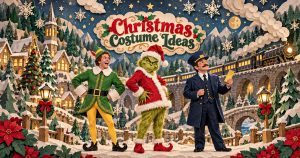
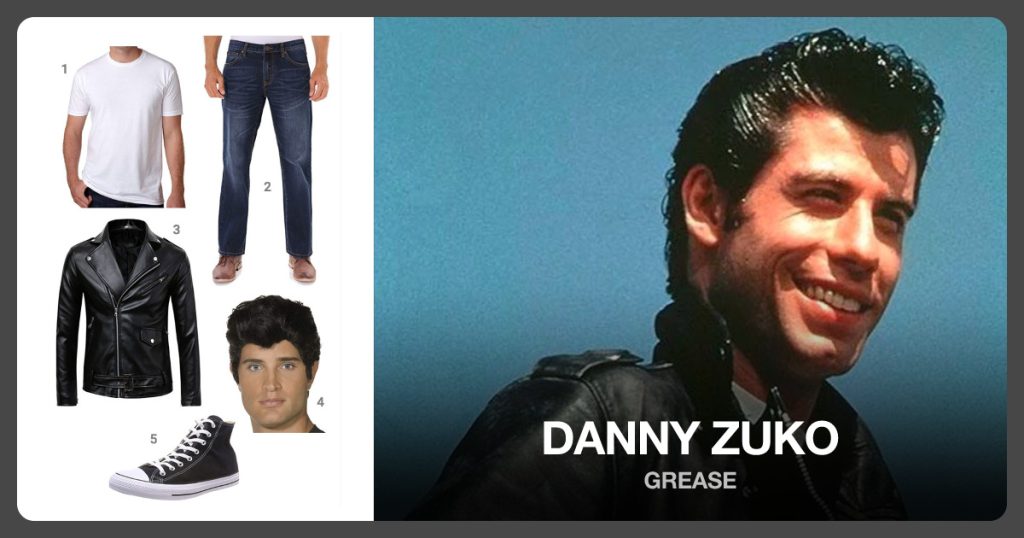
 Grease: leather jacket, white tee and jeans
Choose a character from a stage or screen musical, from Grease and High School Musical to Chicago, Wicked and The Greatest Showman. Compare 30 distinct looks, including everyday clothes, sequined cabaret outfits and storybook gowns, with clear notes on the outfit version and the details that need extra preparation.
Browse Costume Ideas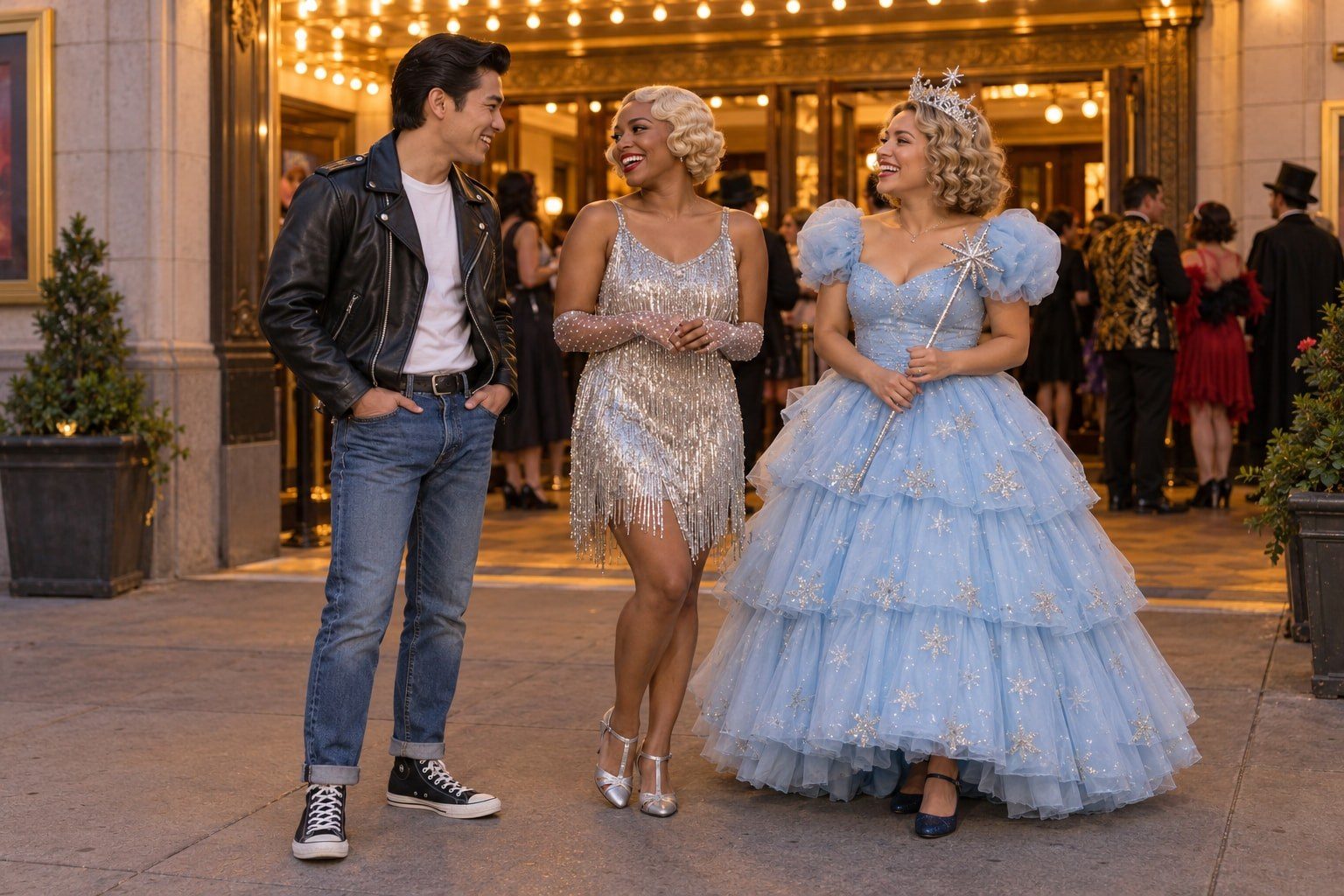
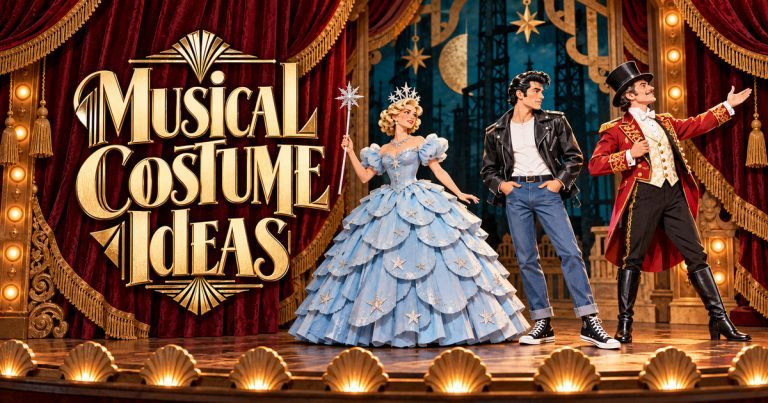
 Danny ZukoLeather jacket, white T-shirt and blue jeans
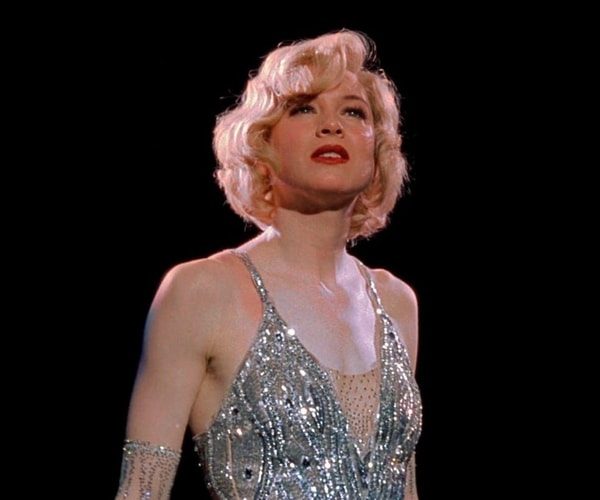 Roxie HartSilver fringe and blonde fingerwaves
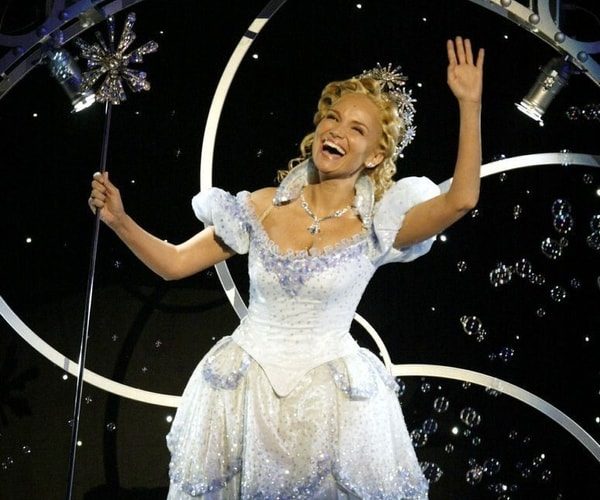 GlindaPale blue stage-inspired gown and star tiara
| Character | Defining Pieces | Preparation |
|---|---|---|
| Danny Zuko | Grease: leather jacket, white tee and jeans | Everyday clothing |
| Sandy Olsson | Grease: carnival outfit with red heels | Specific pieces or styling |
| Rizzo | Grease: Pink Ladies jacket and pencil skirt | Specific pieces or styling |
| Troy Bolton | High School Musical: green track jacket | Everyday clothing |
| Gabriella Montez | High School Musical: orange cardigan and yellow tank | Everyday clothing |
| Sharpay Evans | High School Musical 2: Fabulous poolside look | Specific pieces or styling |
| Tracy Turnblad | Hairspray: ruffled blouse and yellow plaid | Specific pieces or styling |
| Seymour Krelborn | Little Shop of Horrors: glasses and brown vest | Everyday clothing |
No costumes match. Use Reset to see all 30 choices.
Start with recognizable clothes and decide which character detail you want to add. Danny’s leather jacket, Gabriella’s orange cardigan and Seymour’s brown vest can build on familiar separates, while Rizzo’s Pink Ladies jacket and Tracy’s bouffant need more specific sourcing. Sharpay is the poolside exception in this group: her swimsuit-based outfit needs a suitable setting or a deliberate coverage adaptation.
Grease: leather jacket, white tee and jeans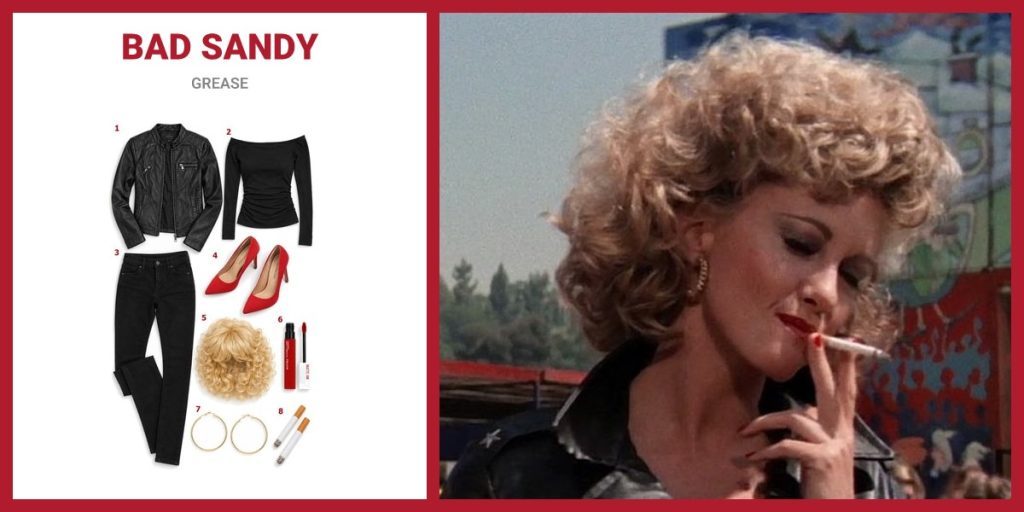 Grease: carnival outfit with red heels
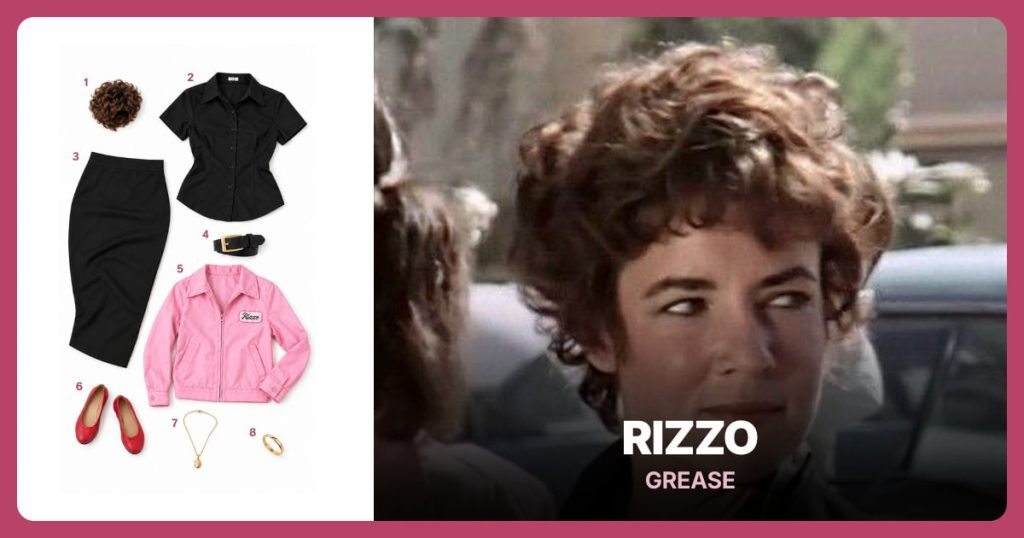 Grease: Pink Ladies jacket and pencil skirt
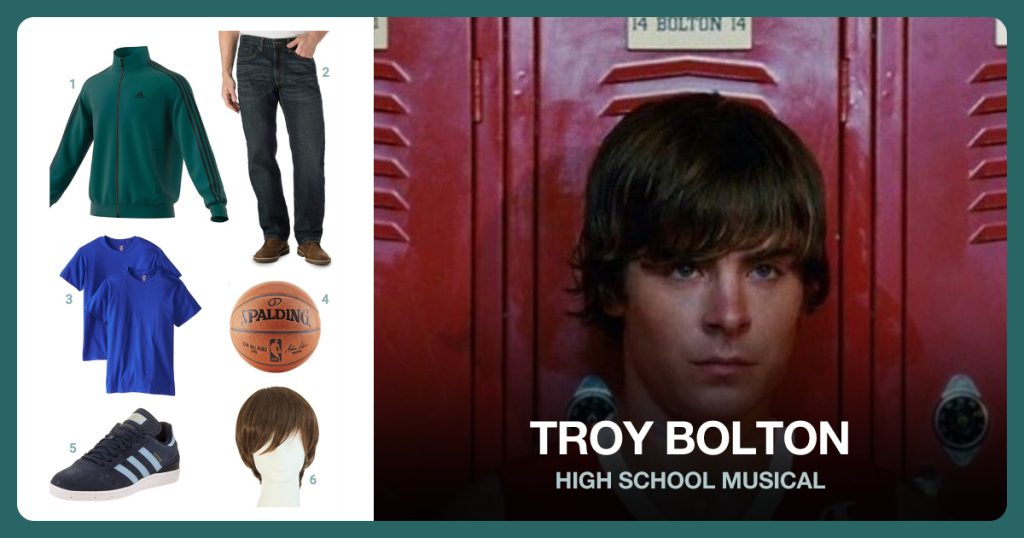 High School Musical: green track jacket
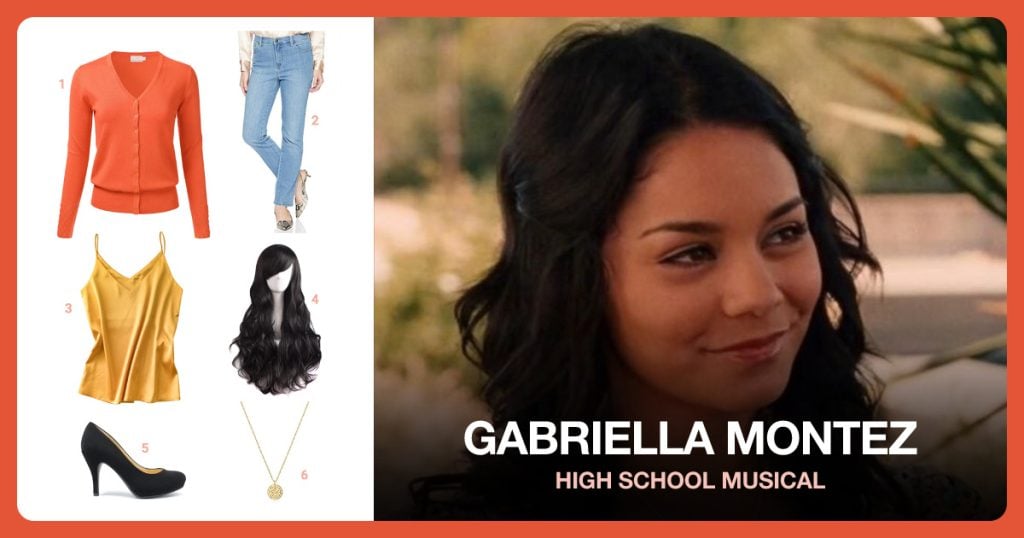 High School Musical: orange cardigan and yellow tank
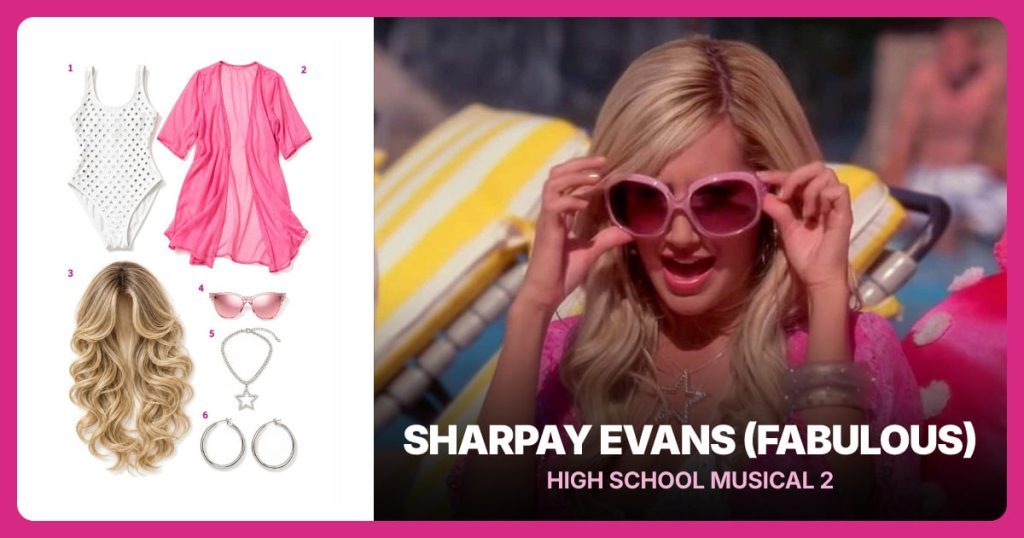 High School Musical 2: Fabulous poolside look
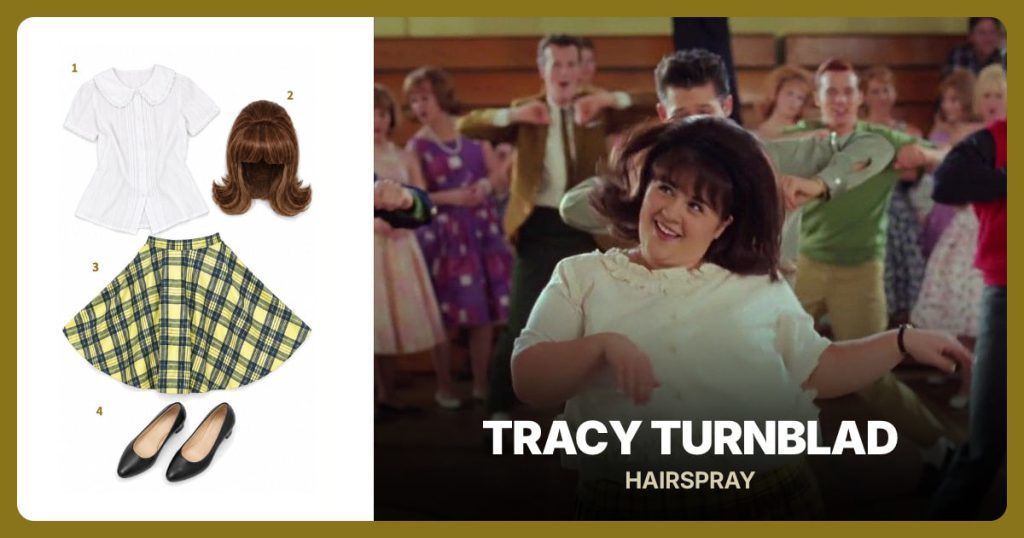 Hairspray: ruffled blouse and yellow plaid
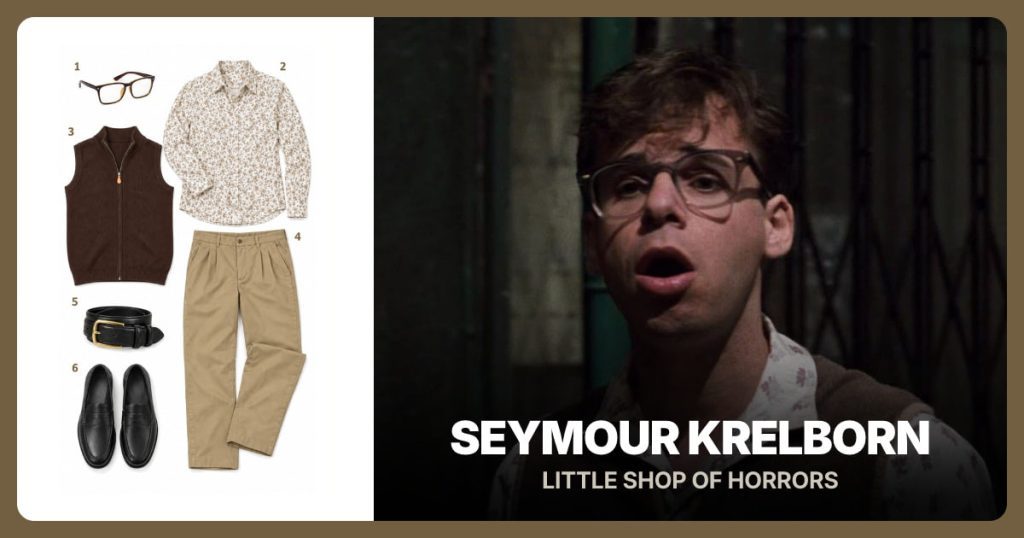 Little Shop of Horrors: glasses and brown vest
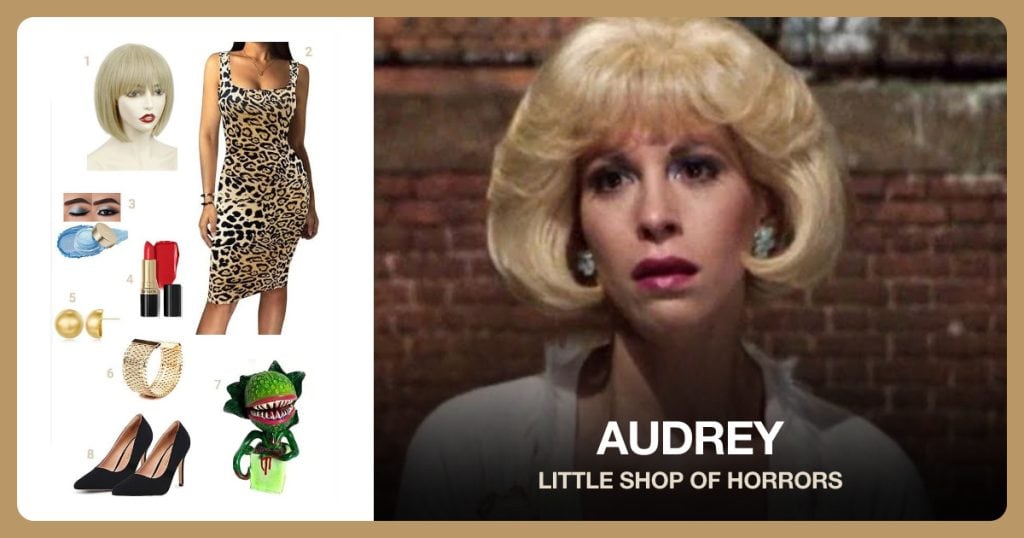 Little Shop of Horrors: leopard-print dress
Choose this group for the strongest stage styling, from Roxie’s silver fringe and Velma’s black bob to Columbia’s sequins. Rocky Horror also gives you covered alternatives in Brad and Janet alongside Frank-N-Furter’s corset look. Satine’s gown is the most formal option here, with a train that needs more care than the shorter dance outfits.
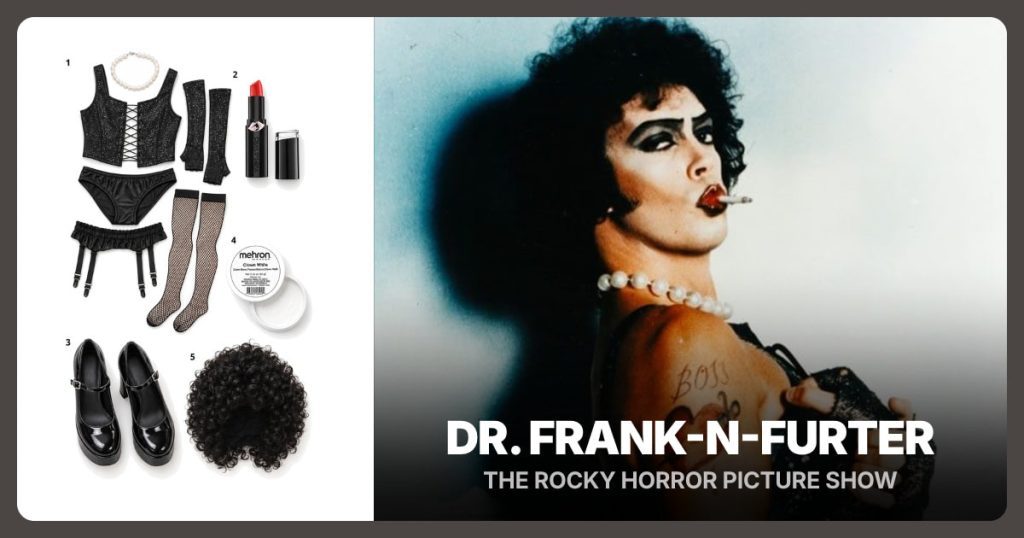 The Rocky Horror Picture Show: corset and pearls
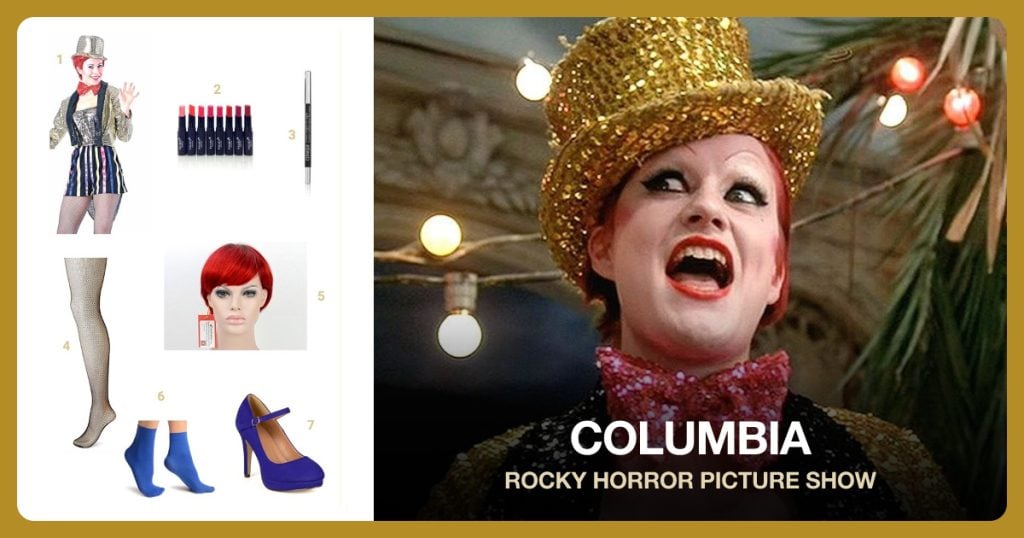 The Rocky Horror Picture Show: sequins and top hat
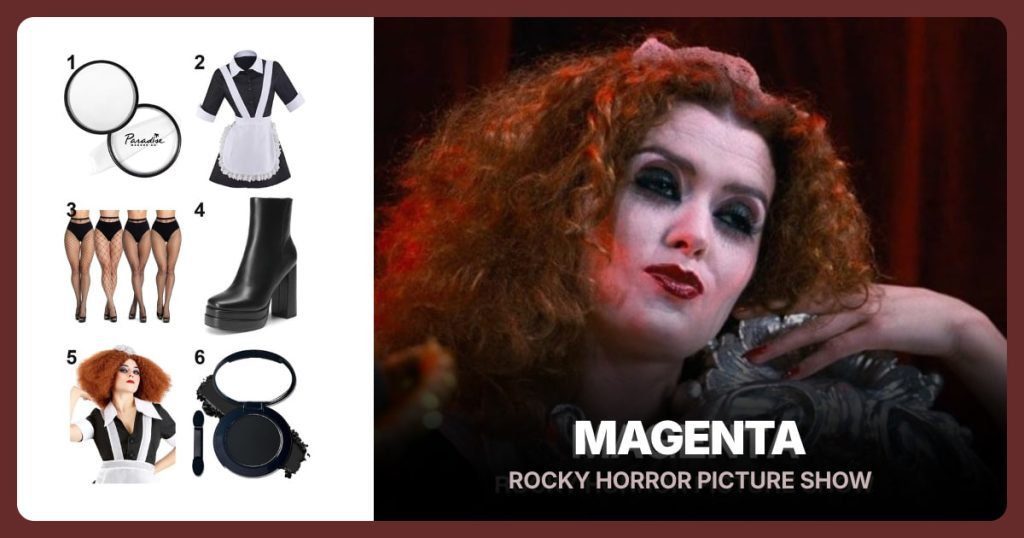 The Rocky Horror Picture Show: black-and-white maid dress
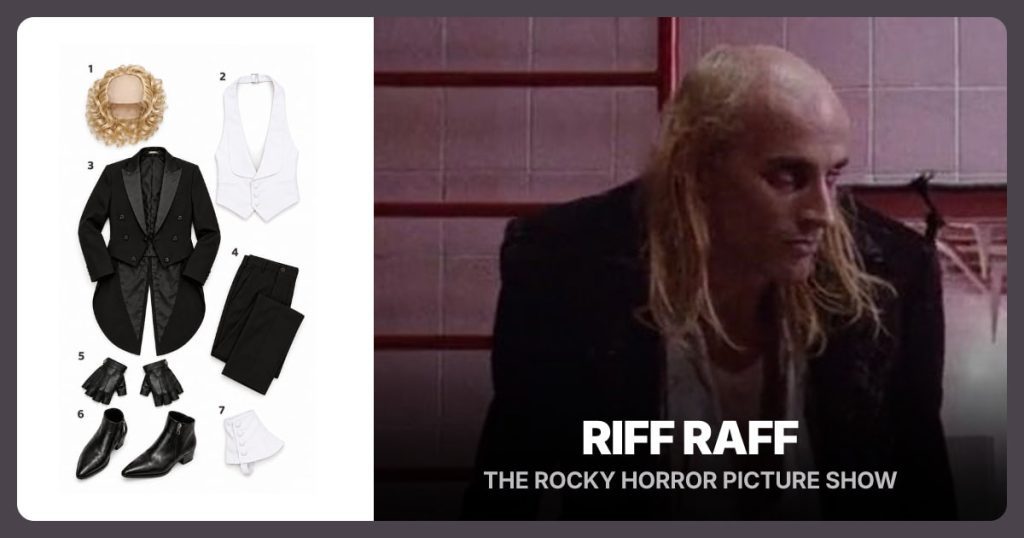 The Rocky Horror Picture Show: tailcoat and blond sides
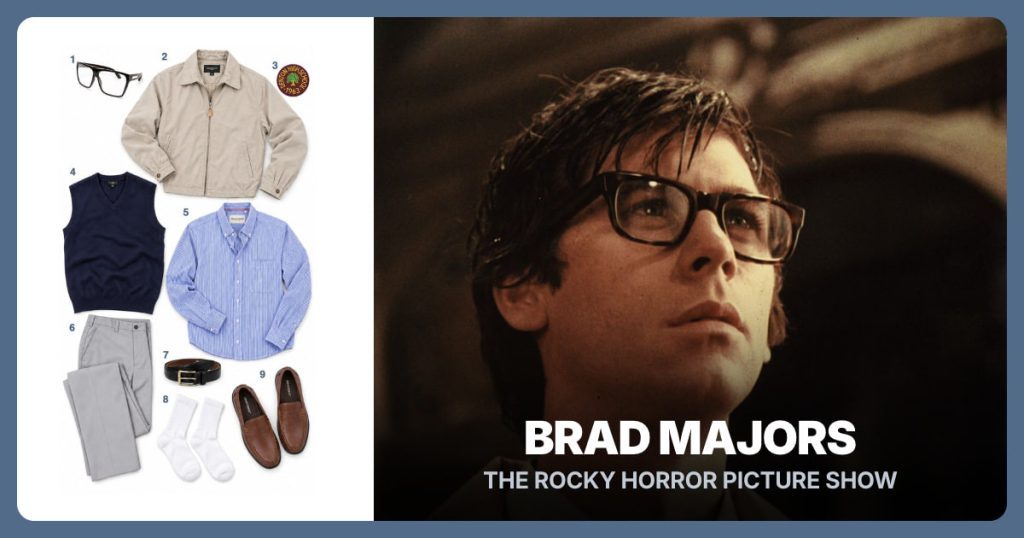 The Rocky Horror Picture Show: tan jacket and glasses
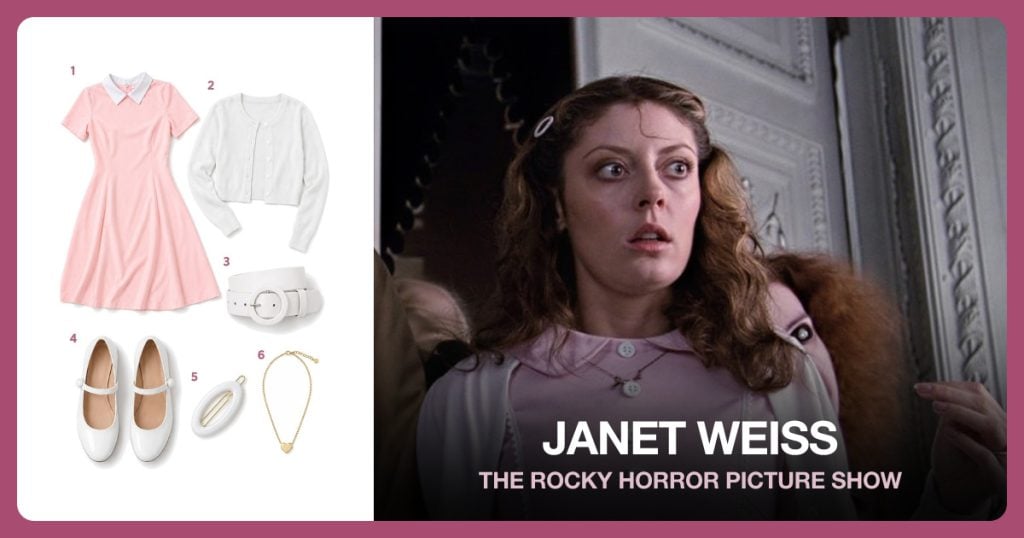 The Rocky Horror Picture Show: pink dress and white layers
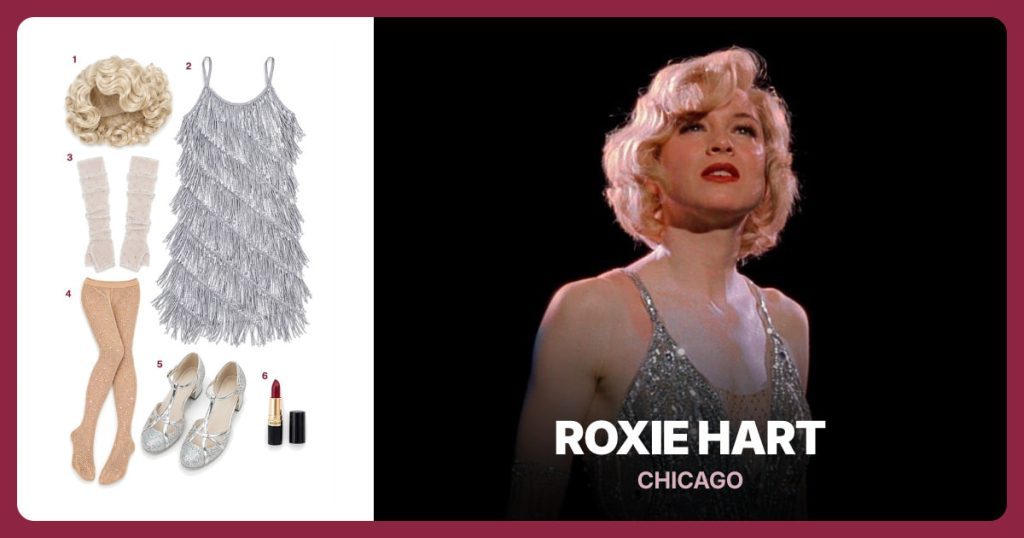 Chicago: silver fringe and fingerwave bob
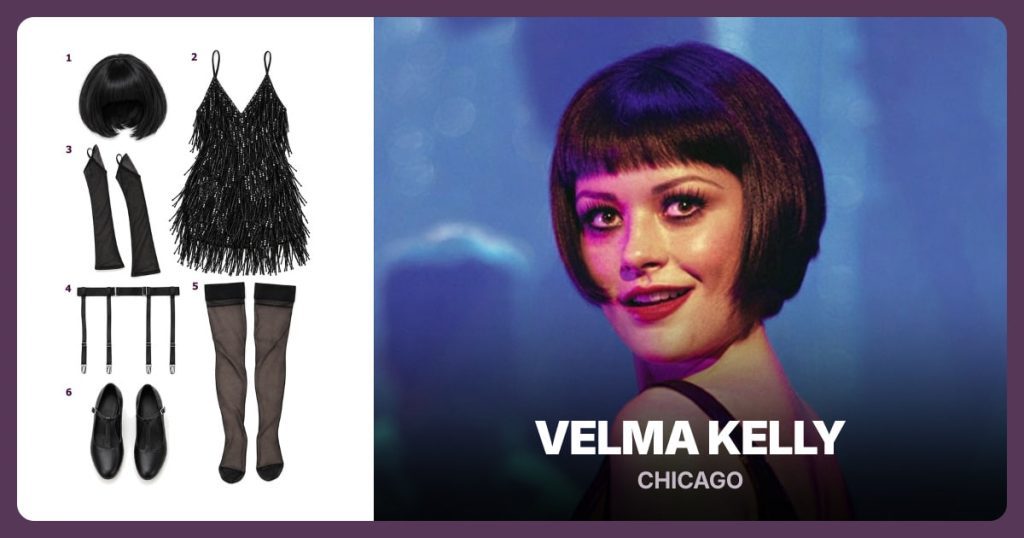 Chicago: black fringe and blunt bob
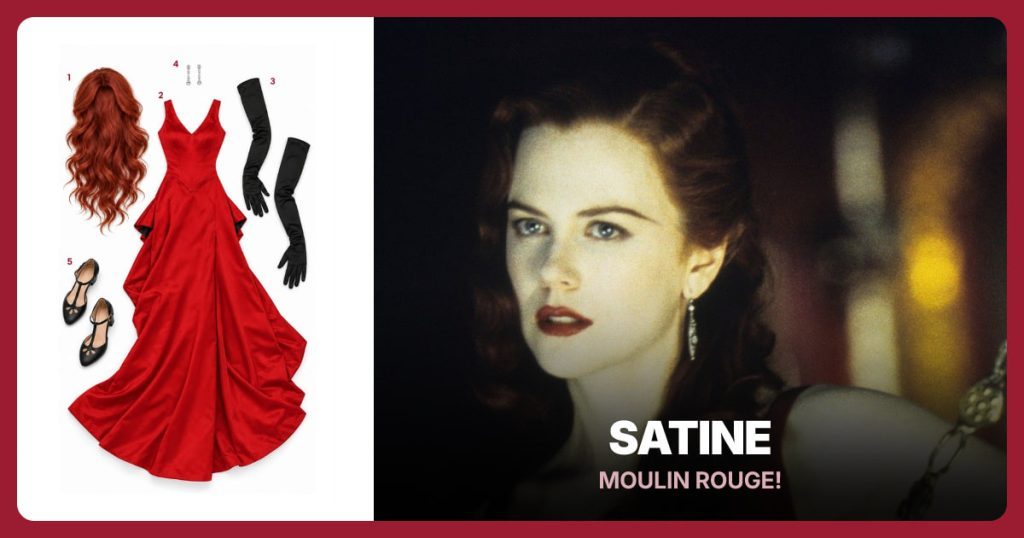 Moulin Rouge!: red satin gown and opera gloves
These looks use a distinctive costume shape rather than one ordinary accessory: Glinda’s blue gown, Wonka’s purple coat and the Wizard’s emerald tailoring make the theme visible across a room. Mary and Bert offer a coordinated story without matching outfits, while Phillip’s simple shirt-and-suspenders look gives a Greatest Showman group a lighter alternative to Barnum’s ringmaster layers.
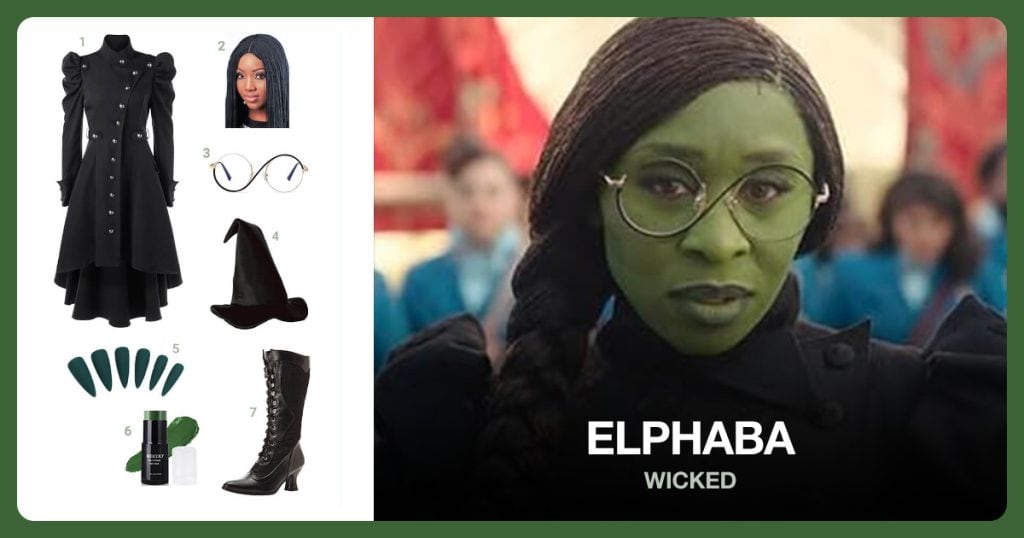 Wicked film: black coat, pointed hat and twists
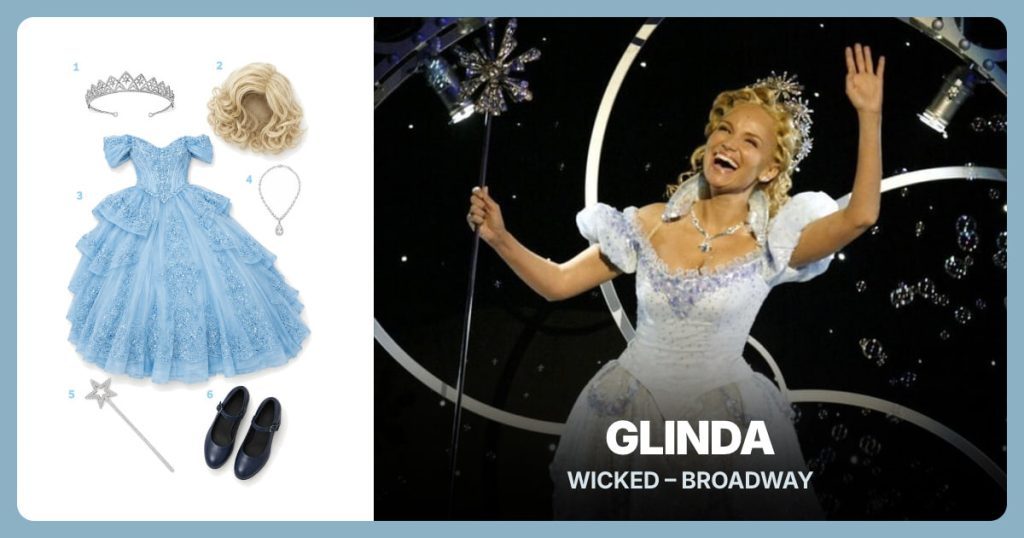 Wicked stage: pale blue tiered gown
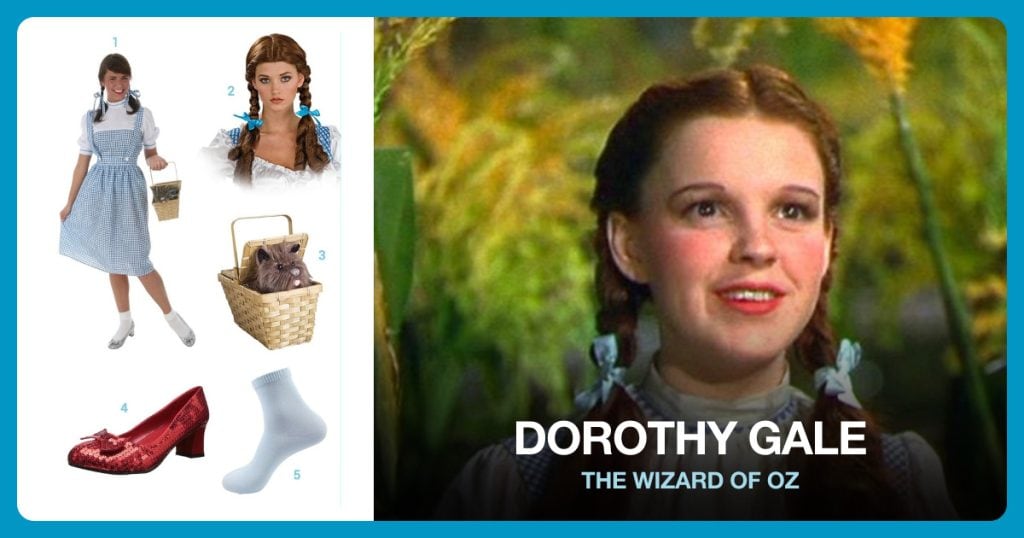 The Wizard of Oz: blue gingham and ruby slippers
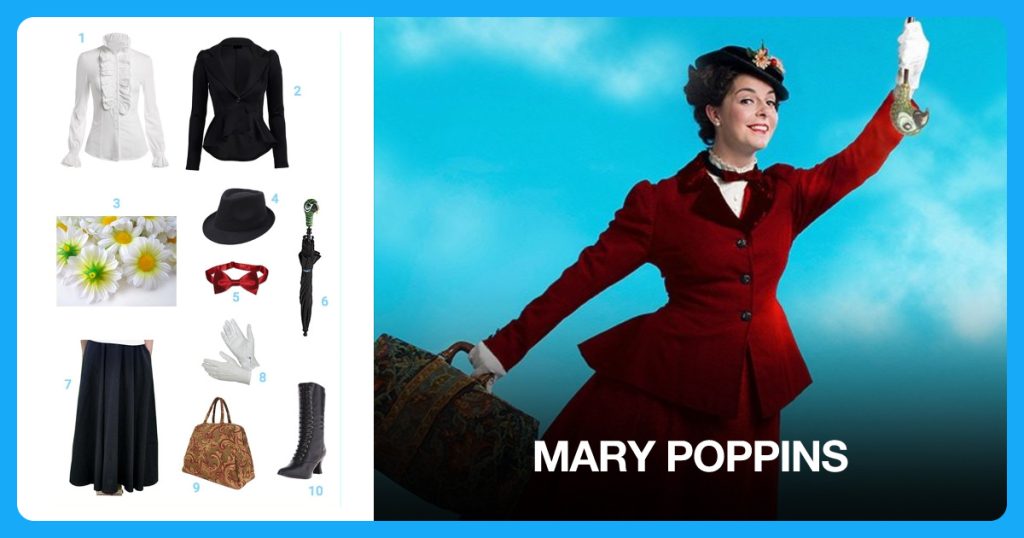 Mary Poppins: blouse, dark skirt and decorated hat
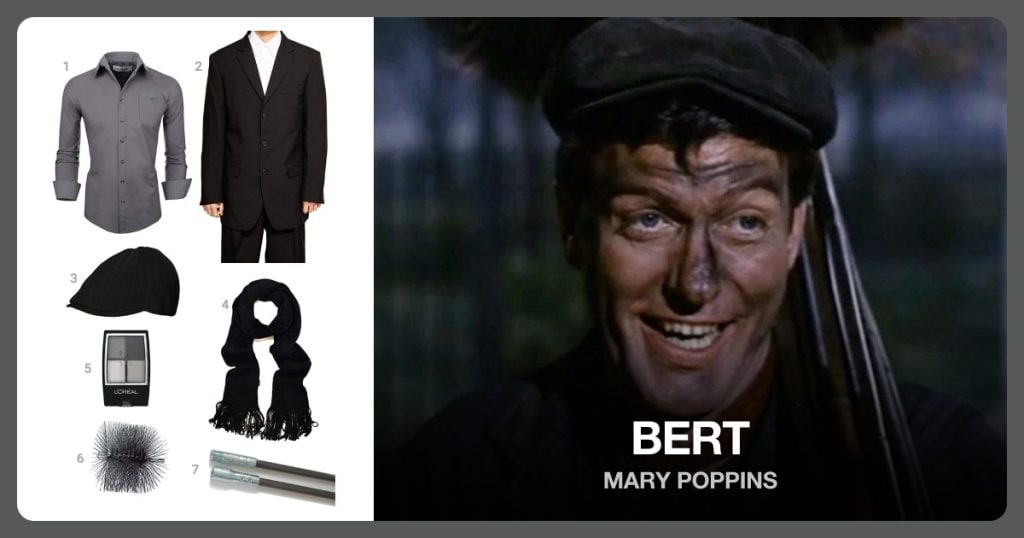 Mary Poppins: chimney-sweep clothes
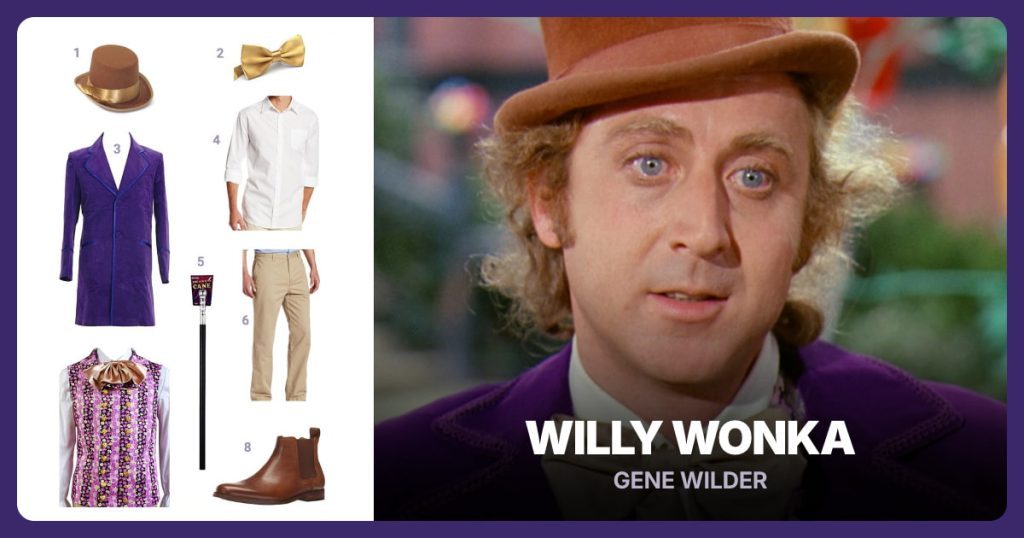 Willy Wonka & the Chocolate Factory: purple coat
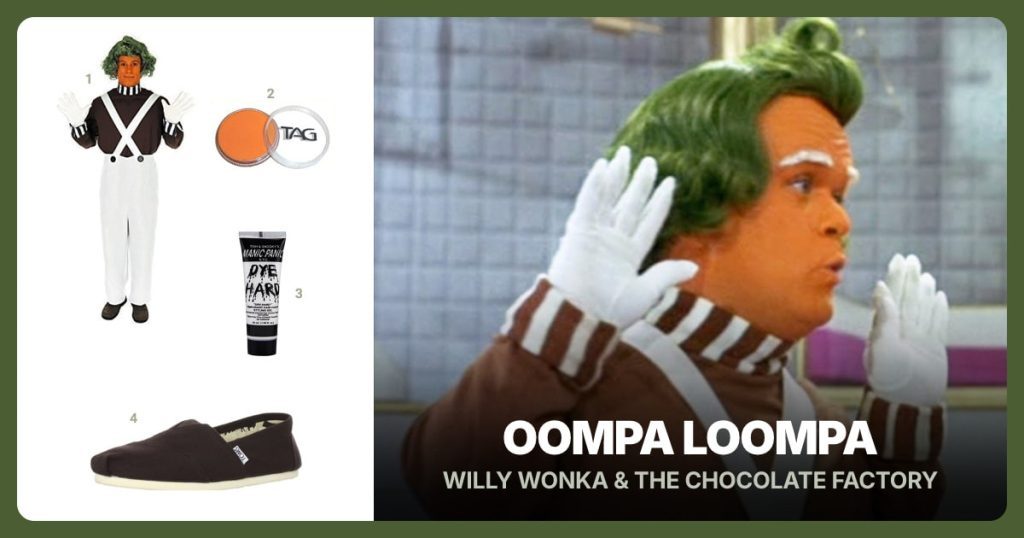 Willy Wonka & the Chocolate Factory: white overalls
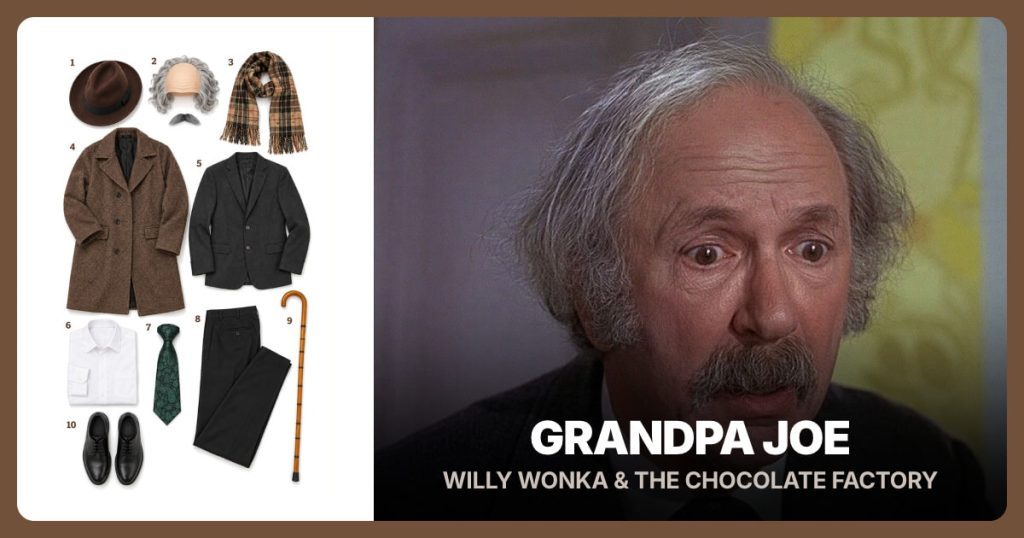 Willy Wonka & the Chocolate Factory: layered tour outfit
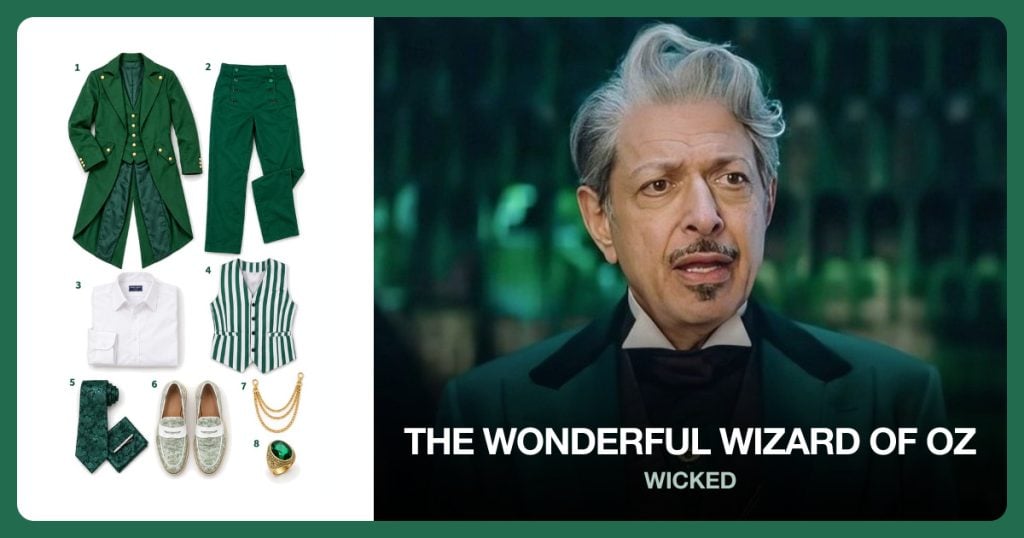 Wicked film: coordinated emerald tailoring
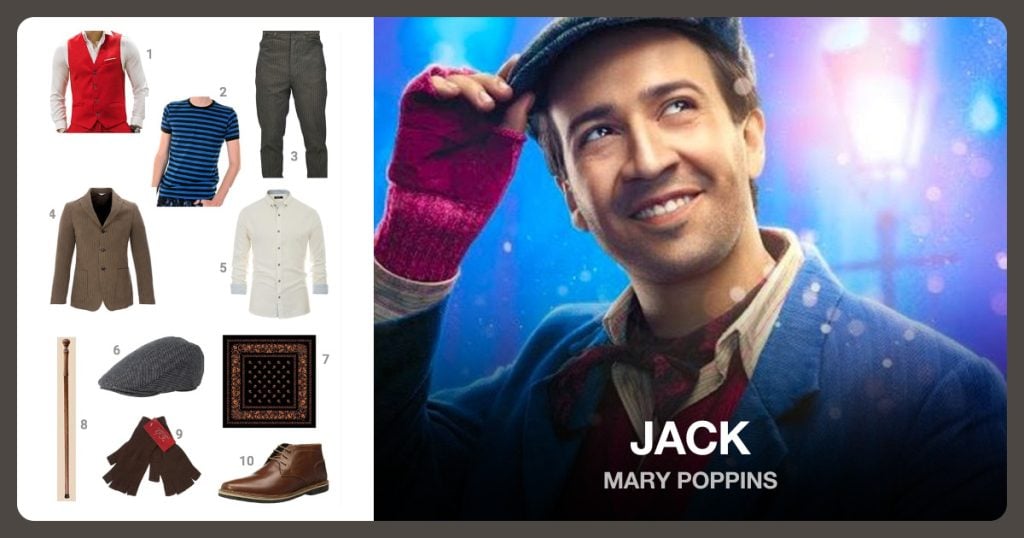 Mary Poppins Returns: red vest and workwear layers
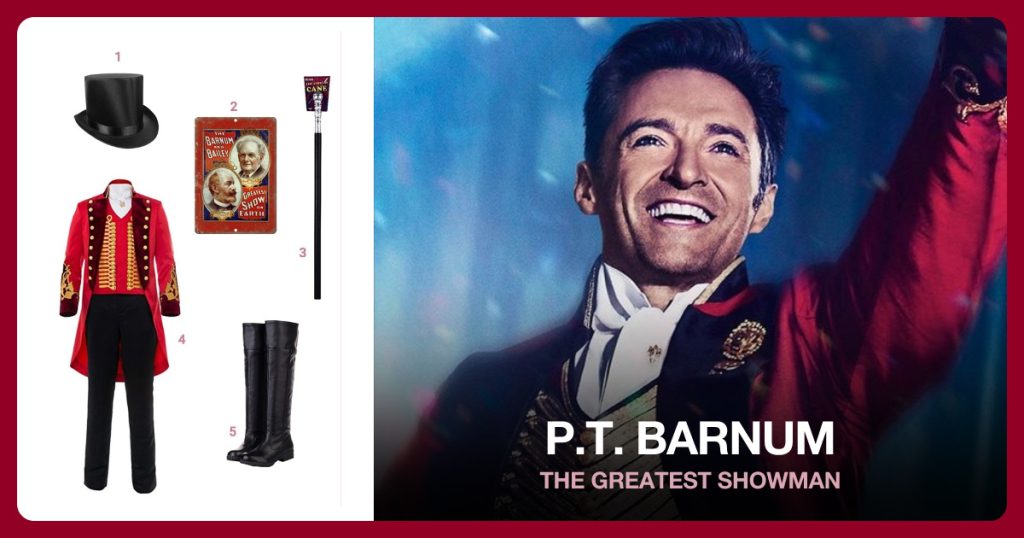 The Greatest Showman: red ringmaster coat
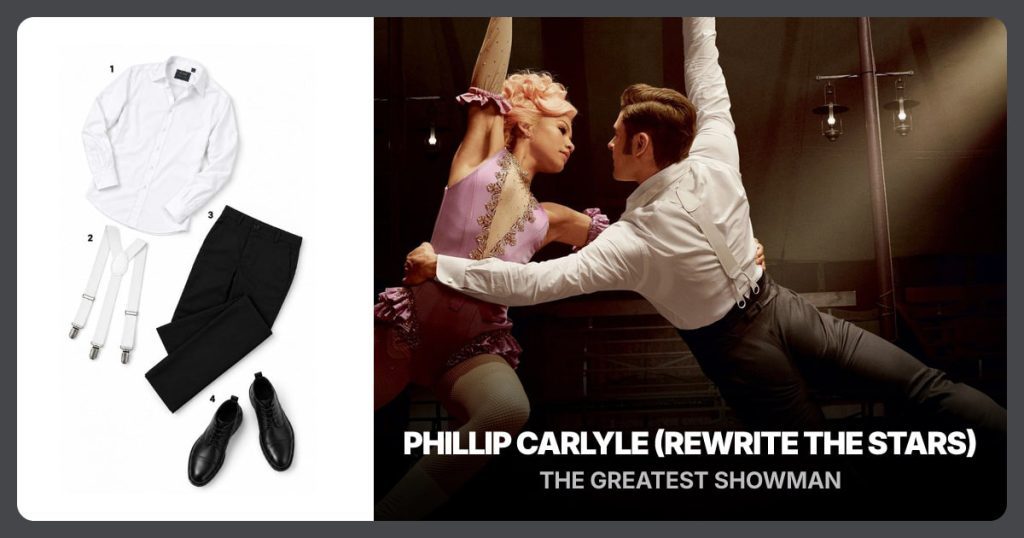 The Greatest Showman: Rewrite the Stars separates
A stage costume and a film costume can have different colors, proportions and accessories. Glinda’s blue stage gown and pink film outfits are a clear example. Decide which interpretation you want before shopping, then keep the main clothing consistent instead of combining every attractive piece from different productions.
Danny, Troy, Gabriella, Seymour and Phillip offer useful routes through familiar separates. Lay out your clothes first, then identify the one missing detail that makes the character clearer: a brown vest, white suspenders, a cardigan in the right color or a track jacket. Ordinary clothes still need the selected color combination to work.
Try the complete outfit while sitting, walking and lifting your arms. Fringe can catch on bracelets, gowns can drag and a skirt that looks fine standing may change when seated. Hem or lift a train before the event and choose a practical shoe adaptation if the original heel makes the evening difficult.
A small plant, basket or closed umbrella is usually easier to manage than a long chimney brush, cane or wand. Bring the identifying prop only when it helps, and leave it aside while dancing or eating. Never recreate aerial choreography with party furniture or improvised suspension equipment.
Danny, Sandy and Rizzo create a clear Grease group; Troy, Gabriella and Sharpay work for High School Musical. Brad and Janet or Roxie and Velma give two people distinct looks. Match the production and outfit direction first, then let each person choose the role and level of coverage they prefer.
A hairstyle can be the most specific part of Tracy, Riff Raff, Audrey or Roxie. Shape and secure it before adding the costume. Use only skin-rated cosmetics for optional character color, remove them as directed and keep face color separate from assumptions about a performer’s identity. Clothing and silhouette can carry the costume on their own.
Danny, Troy, Gabriella, Seymour and Phillip are useful starting points. Each relies on a specific combination of separates: Danny’s white tee and jacket, Gabriella’s orange cardigan and yellow tank, or Phillip’s white shirt and suspenders. Check the linked version before adding a prop or wig; an unrelated outfit in the same general era will be less specific.
Both. The cards identify the relevant production or interpretation where it changes the clothes. Most follow a film look, while Glinda’s pale blue gown takes its direction from the original Wicked stage costume. These are party costume interpretations, with practical differences explained rather than a claim that every item reproduces a production wardrobe exactly.
Danny and Sandy, Brad and Janet, Seymour and Audrey, or Roxie and Velma each give two people distinct roles from one musical. Mary and Bert also work together without wearing the same colors. Use the individual cards to plan both outfits, and agree on the version before buying matching accessories.
No. You can keep the recognizable clothing and hairstyle without character face color. If you choose cosmetic color, use a product made for skin and follow its instructions. For Elphaba, plan the makeup separately from the coat and boots rather than assuming the clothing includes a complete cosmetic kit.
Brad’s tan-jacket arrival outfit, Janet’s pink dress and cardigan, and Riff Raff’s tailcoat offer covered starting points. Magenta’s dress is another route, depending on the set’s cut and length. Frank-N-Furter’s corset look is more revealing; opaque layers can be a deliberate adaptation when that is what you want to wear.
Check the specific theatre or event’s rules first. A sing-along, themed party and ordinary performance can have different expectations. Avoid anything that blocks another person’s view, interferes with seating or sheds glitter. For an ordinary seated performance, a smaller accessory or toned-down interpretation may be more practical than a tall hat, wide gown or long prop.
Choose the character whose actual clothes fit your plans, then build the costume in that order. A simple pair of suspenders or cardigan can be more useful than a complicated prop when the colors and styling are right. For the elaborate looks, leave room to sort out the hem, wig and accessories together rather than treating them as separate purchases. The best finishing choice is the detail that remains clear while you are moving, sitting and enjoying the event.
For more characters from one musical, browse Grease costumes, High School Musical costumes, or Wicked costumes.
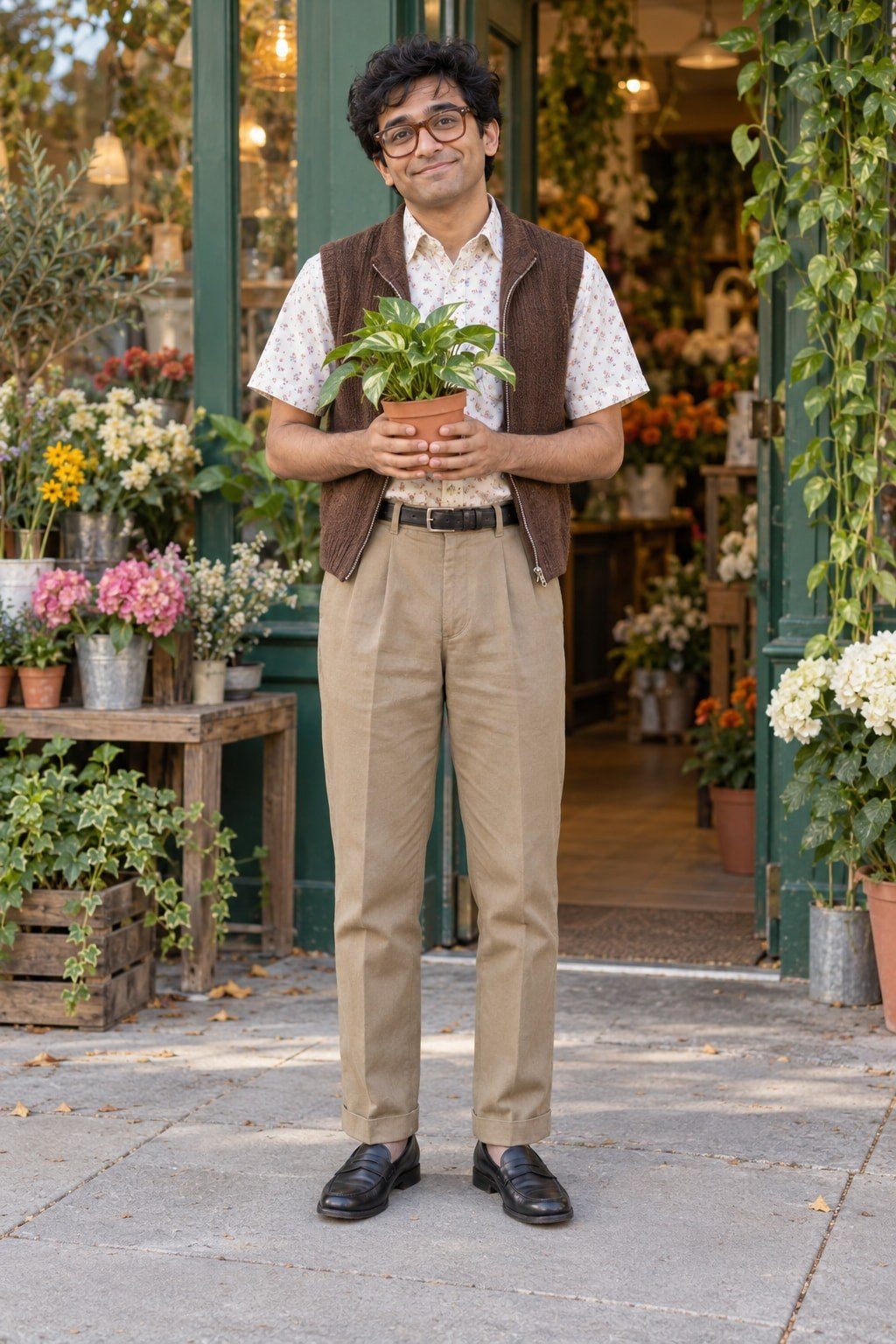
A musical theme can accommodate very different costumes in one room. Someone in Seymour’s vest and glasses can join Glinda’s gown, Roxie’s fringe and Barnum’s ringmaster coat without needing to match their preparation effort. Start with the role you like, use the specific outfit as your reference and concentrate on the garment or hairstyle that makes it recognizable.
If you are planning with friends, pick the musical before assigning roles. Compare each person’s clothing, coverage and prop preferences, then check that everyone has a complete outfit. A shared story gives you a stronger group than asking everyone to wear the same kind of jacket or dress, and it leaves room for both simple separates and a full theatrical entrance.
We choose distinct characters from stage and screen musicals, comparing the actual clothing shown in each linked costume guide. Versions are identified where stage and film wardrobes differ. Official musical and studio references supply character context; the outfit notes explain practical interpretations, extra styling and source discrepancies. Alternate costumes for one character are not counted as separate choices.
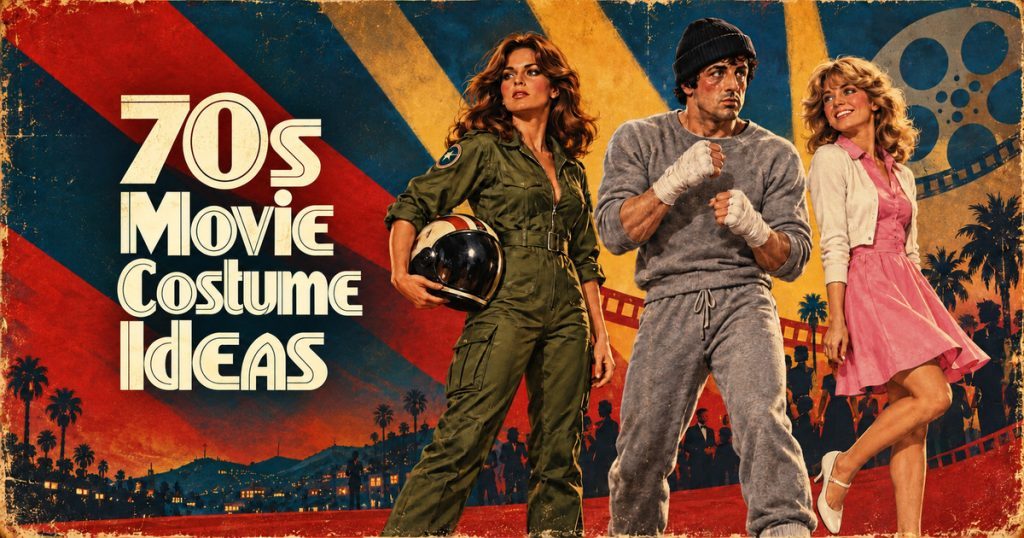
Explore more 1970s movie characters beyond the musical theme.
Compare more film outfits from the 2000s, including comedy and adventure.
Browse magical and storybook film costumes beyond musicals.
CW is reader-supported. When you buy through links on our site, we may earn an affiliate commission. Learn more about CW →