


















Dave Bowman Costume Guide from 2001: A Space Odyssey
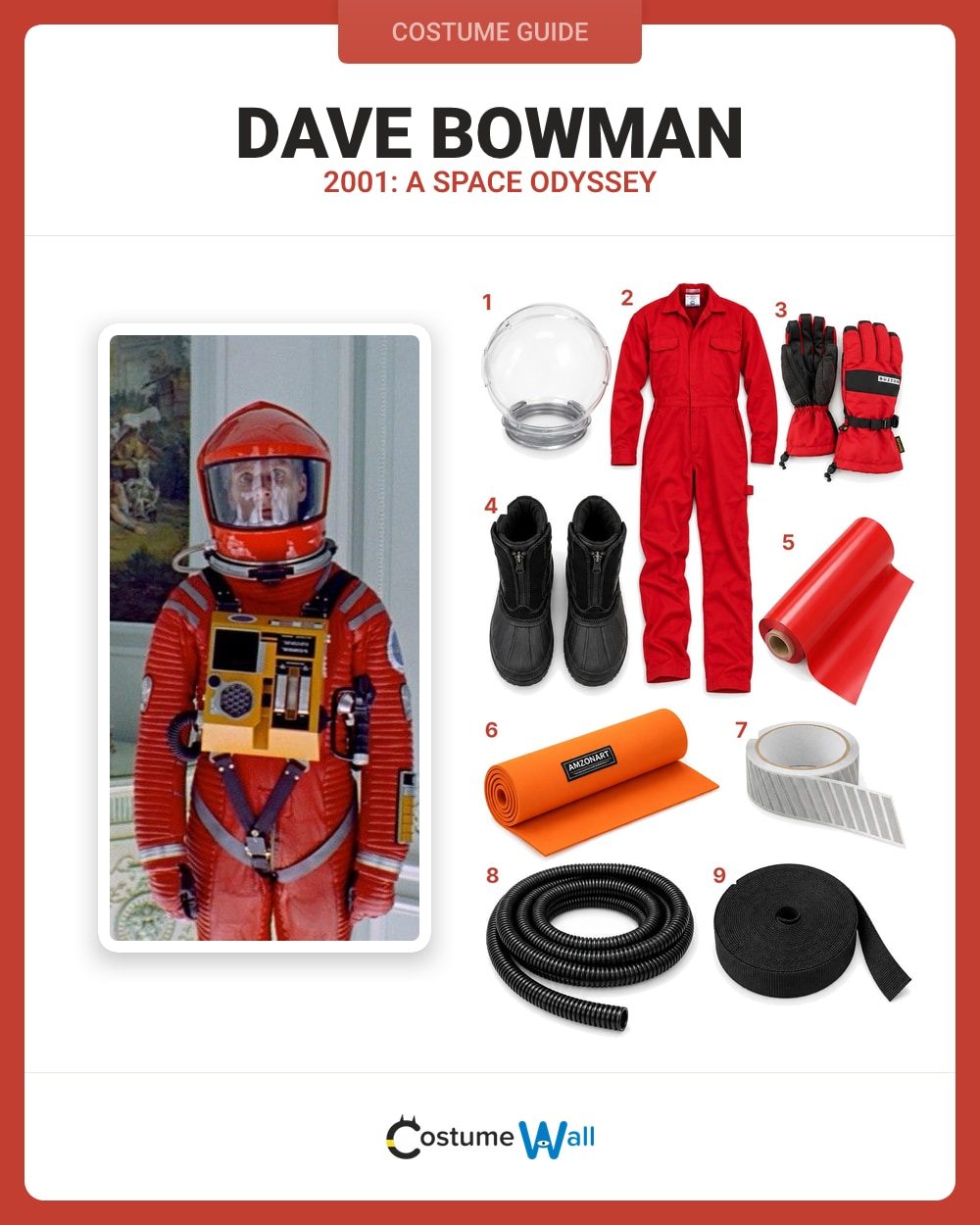
DIY Costume Items
- Clear Globe Helmet See on Amazon
- Red Work Coveralls See on Amazon
- Red and Black Gloves See on Amazon
- Black Winter Boots See on Amazon
- Glossy Red Adhesive Vinyl See on Amazon
- Orange EVA Foam See on Amazon
- Silver Reflective Fabric Tape See on Amazon
- Black Corrugated Tubing See on Amazon
- Black Nylon Webbing See on Amazon
Best Dave Bowman Costume Guide
Dave Bowman is an astronaut in Stanley Kubrick’s 1968 film 2001: A Space Odyssey. He’s part of a mission to Jupiter, where the crew’s plans involve the famously unsettling HAL 9000. Bowman’s red Discovery spacesuit is a memorable bit of movie design: bright, bold, and ready for a very serious space walk. The helmet and life-support gear make this a fun build for anyone who likes a costume with a little hands-on engineering.
Start with red work coveralls, black boots, and red-and-black gloves, then add silver bands at the shoulders, wrists, and hips. The coveralls are smooth rather than densely ribbed like the film suit, so keep that difference in mind. The clear globe helmet needs a segmented red vinyl skin while leaving its broad face window and vents open. Make lightweight orange chest and back packs from cardboard and EVA foam, then add webbing, short decorative hoses, and simple paper controls. Follow the complete illustrated build below for the helmet skin, pack boxes, and removable straps. This is a substantial costume project; the simpler Astronaut guide is useful if you want fewer handmade pieces.
ProjectBowman Helmet and Life-Support Packs
TechniqueAdhesive-vinyl helmet skin, cardboard-and-foam boxes, and sewn straps
Materials for the Red Discovery Suit
From the Kit
The clear costume globe gets its red outer skin from the glossy red vinyl. Use orange EVA foam to clad the lightweight cardboard packs and make the wrist panel; black nylon webbing carries them, and short lengths of black corrugated tubing make decorative loops. The silver heat-transfer fabric tape adds the suit’s bands. The plain red coverall, red-and-black gloves, and black boots finish the purchased kit.
From Home
Two shallow lightweight cardboard boxes or corrugated cardboard, paper, pencil, ruler, scissors, a craft knife and cutting mat if needed, black and silver cardstock or markers, black vinyl/electrical tape, silver adhesive craft tape, foam-compatible adhesive, strong needle/thread, sew-on hook-and-loop tape, small white adhesive-fabric scraps and blue marker for a simple shoulder badge, and the iron/press cloth required by the reflective fabric tape label. Buy missing supplies separately. Use the selected red coverall, clear costume globe, red/black gloves, black boots, red vinyl, orange foam, silver fabric tape, black webbing and black corrugated tubing.
A Wearable Interpretation
The smooth work coverall lacks the film suit’s dense ribbing, and the clear globe is rounder than the peaked movie helmet. Keep those actual shapes rather than expecting replica parts. The red palette, broad clear face window, orange packs, and silver bands carry the look.
Two Different Silver Tapes
The purchased reflective tape is heat-transfer tape for compatible fabric. Follow its label and the garment’s care label. Use separate household silver adhesive craft tape on the plastic helmet rim; never iron the helmet. Keep the original neck opening and every vent clear.
Build Bowman’s Red Helmet and Life-Support Packs
Make the helmet skin and light equipment before dressing. The illustrations show the main actions; fit the paper patterns and straps over your own coverall before cutting the final pieces.
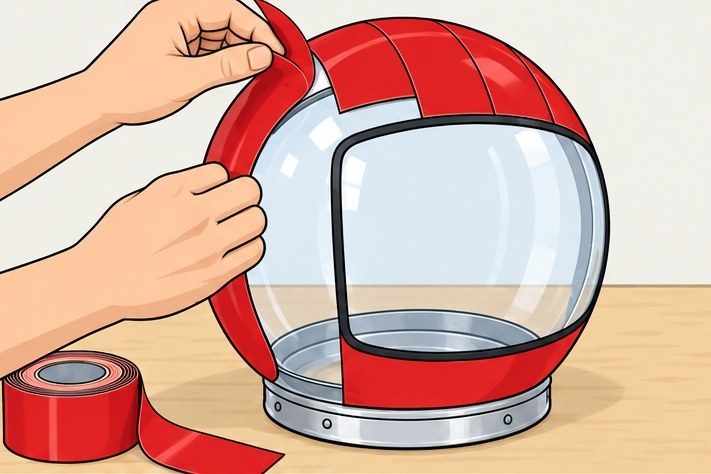
1. Give the clear helmet its red outer shell
Fit the purchased clear costume globe before decorating it. With it off your head, mark a broad front face window using removable paper tape: it must stay clear above the eyes, past both cheeks and below the mouth. Make paper patterns for the outside top, sides, back and a separate strip below the window. Transfer those patterns to the red adhesive vinyl and cut them with scissors. Apply the top in narrow overlapping curved sections, smoothing outward; stop short of the original neck opening and every ventilation opening. Add a narrow black tape border around the clear front window. Use household silver adhesive craft tape on the existing lower rim to suggest the film collar. Never iron the fabric tape onto the plastic. Leave the globe shell intact and do not seal it to the suit.
Check: Your face is fully visible through the front, the neck and original vents remain open, and the helmet lifts off easily.
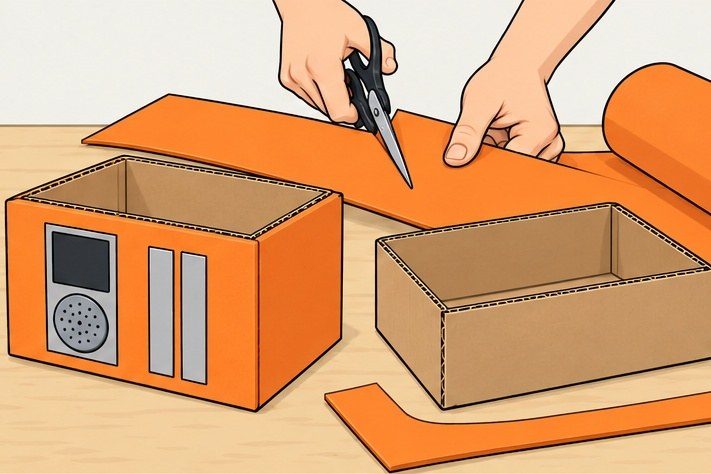
2. Build the two orange pack boxes and wrist panel
Hold paper rectangles against your torso to size a shallow chest box from upper chest to above the waist, plus a similar rear box that stops above the hips. Start near 10 by 12 inches for the front and adjust it to your body. Make each from lightweight cardboard, closing the edges with tape; keep the boxes shallow and empty. Cut orange EVA panels to match and attach them with foam-compatible adhesive as its label directs. On the chest face, add a dark square screen at the upper left, a round dark speaker below it, and two slim vertical silver gauges at the right, using cardstock and marker. Add a small orange rectangular shelf below the gauges from an offcut. Keep controls flat. Make a small orange wrist panel from another foam offcut, with drawn silver and black details; its removable fabric band will sit over the sleeve.
Check: Both packs stay light, the chest controls are arranged clearly, and the front box clears your waist when you sit.
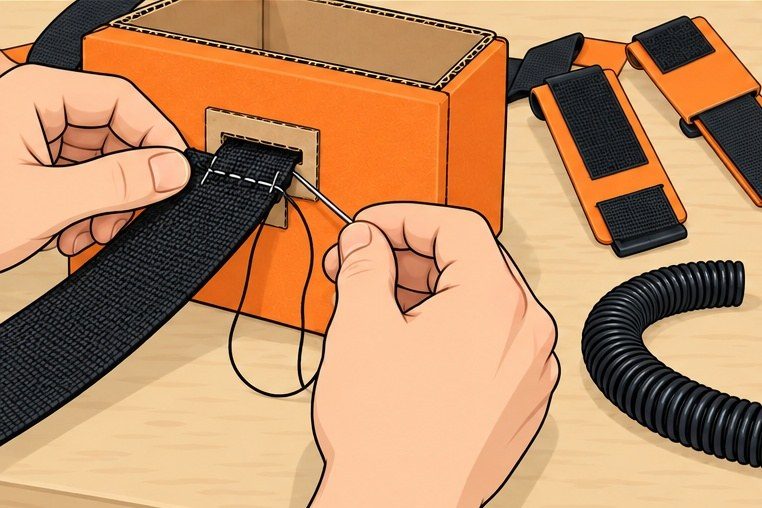
3. Fit the webbing harness and decorative hoses
Cut two black webbing lengths to run from the chest box over your shoulders to the rear box. Reinforce each cardboard attachment with an extra cardboard patch inside; pass webbing through paired slots and fold the ends back, sewing the folds securely. Add a waist-level webbing strap with overlapping hook-and-loop closure at one side so the whole assembly opens. For the film’s lower V shape, sew two short diagonal strips between the chest box bottom and the waist strap, keeping them above the hip crease. Trim two short lengths of black corrugated tubing into side loops; cover cut edges with black tape and fasten the ends to the boxes using broad tape tabs through reinforced slots. Do not connect a hose to your face or helmet. Stitch the wrist panel’s hook-and-loop band and check every strap over your actual coverall.
Check: The packs rest on the shoulders without a neck strap, the side opens easily, and short hose loops cannot catch under your arms.
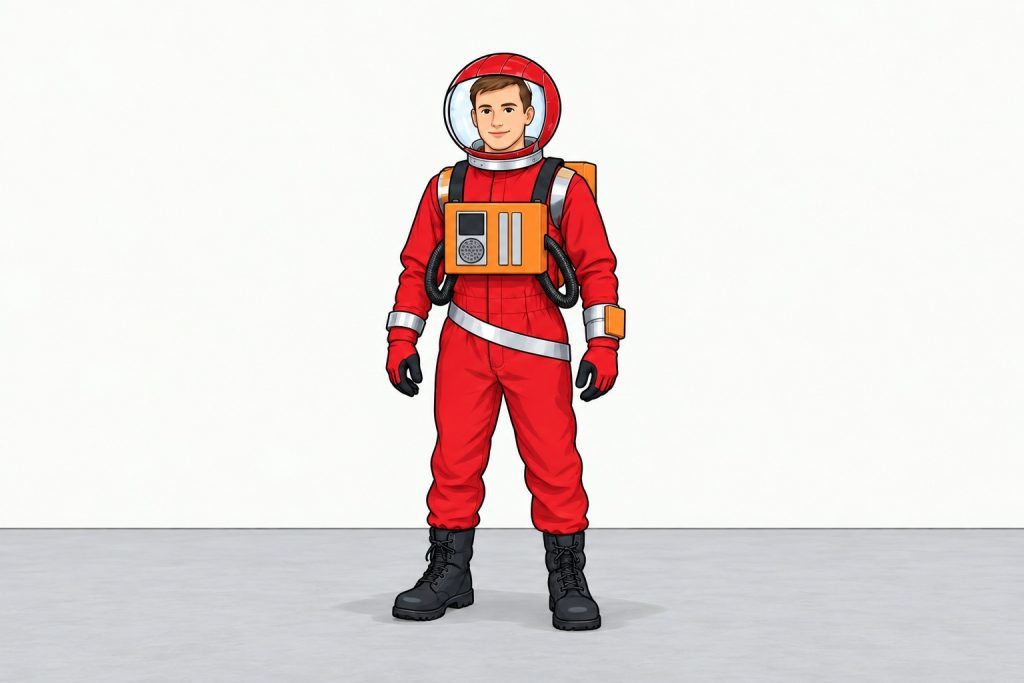
4. Add the silver bands and finish the red suit
Test the selected heat-transfer silver fabric tape on a hidden coverall area, following its label and the garment care label. Add short shoulder bands, wrist bands and diagonal hip bands inspired by the reference; keep them away from the zipper, joints and pockets you need to use. The cotton coverall stays smooth rather than reproducing the movie’s dense horizontal ribbing. Draw a simple blue circular space badge on a white adhesive-fabric scrap for the upper sleeve; do not add a NASA logo or flag. Dress in the coverall, both black boots and both red/black gloves, then the removable pack harness, wrist panel and decorated red helmet. Keep hems above the soles. Walk, sit, raise your arms and turn your head; shorten a hose, move a pack or loosen a closure that catches.
Check: The finished silhouette has the red helmet and suit, orange chest/back packs, silver trim, red gloves, dark boots and a clear visible face.
Quick Fixes
The Vinyl Wrinkles
Lift the affected section and recut it as two smaller curved pieces. Put overlaps at the back or sides of the helmet, keeping the clear face window clean.
The Chest Box Tips Forward
Shorten the shoulder straps and move the side closure until the box sits near your chest. Keep both packs shallow and empty, and reinforce any soft cardboard slot before wearing it again.
A Hose Catches Under Your Arm
Shorten the loop and refasten its taped ends to the pack. Keep both loops within the width of your torso rather than dangling toward your hands.
The Silver Tape Will Not Bond
Check the tape’s temperature, press-cloth and fabric instructions against the coverall care label. Test an unseen area first; do not increase heat beyond the garment’s limit.
How to Dress Like Dave Bowman
Put on the red coveralls and both black winter boots, with the hems clear of the soles. The smooth coverall gives you the film’s full-length red silhouette; the original fabric has dense horizontal ribbing. Add the tested silver shoulder, wrist and diagonal hip bands as shown in the illustrated build, keeping the zipper and moving joints clear. Use the heat-transfer tape only on compatible fabric, following its label.
The red helmet skin and orange life-support packs are handmade. Follow the build below before dressing. Keep the helmet’s broad face window clear and its original vents and neck opening unobstructed. Use separate silver adhesive craft tape for the helmet collar; never press the fabric tape onto plastic. The clear globe is rounder than Bowman’s pointed movie helmet.
Put the pack harness over your shoulders and fasten its removable side closure, then add the small wrist panel and both red-and-black gloves. Keep the hose loops short and attach them only to the pack boxes. Walk, sit and raise your arms to check the fit; loosen anything that pulls at your neck or catches near a joint. For a cross-film space-explorer group, Cooper from Interstellar makes a recognizable companion.
Dave Bowman Costume FAQs
A few quick tips for building Bowman’s red spacesuit without turning your craft table into mission control.
Apply segmented red vinyl to the outside top, sides, back, and chin area, leaving a broad clear face window. Outline the window in black tape and keep the neck opening and vents unobstructed.
Make lightweight boxes from cardboard and cover them with orange EVA foam. Add simple paper controls, foam-disc dials, and webbing straps so the packs sit securely without resting on your neck.
The red work coveralls keep the color and full-length shape, but they’re smooth rather than densely ribbed like the film suit. Silver tape bands and the orange packs help bring the overall design together.
No, do the vinyl work with the helmet off your head. Don’t cut or heat-shape the globe, and leave its ventilation and neck opening clear.
The red helmet and suit, silver bands, and orange chest and back packs are the key visual cues. Keep the helmet red for this version, rather than switching to a different character’s suit or helmet.
About Dave Bowman
Dave Bowman is an astronaut in Stanley Kubrick’s 1968 film 2001: A Space Odyssey. The story follows a mission to Jupiter and features the HAL 9000 computer. Bowman’s red Discovery spacesuit, helmet, and orange life-support gear are among the film’s most recognizable designs. This guide follows the red-helmet version seen in the film, with practical handmade equipment and a smooth red coverall base.

Other Costume Ideas and Cosplay Guides