











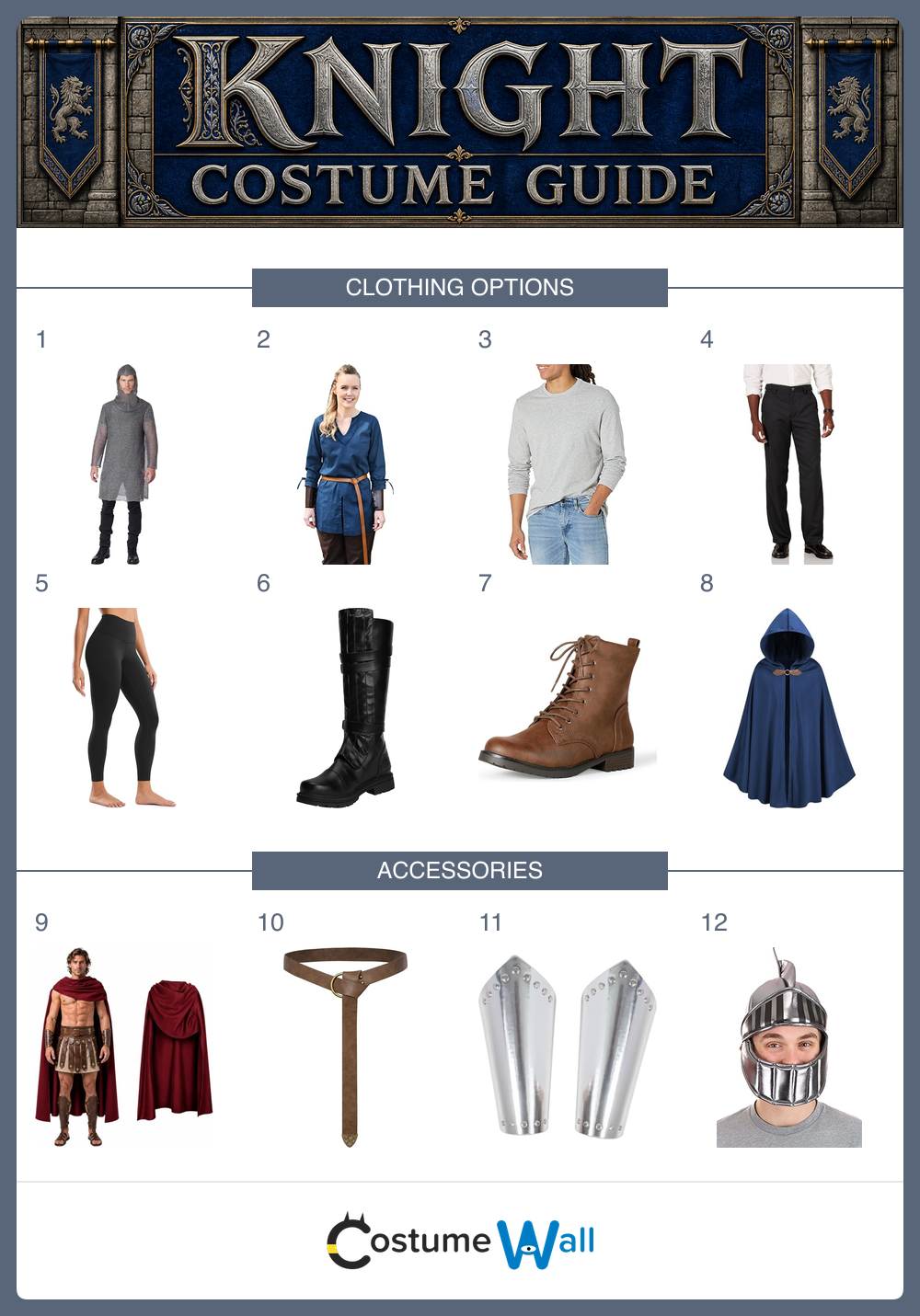
Essential Knight Items
Clothing Options
Choose one base outfit; these pieces are alternatives.
- Metallic Chainmail TunicSee on Amazon
- Blue Medieval TunicSee on Amazon
- Gray Long-Sleeve ShirtSee on Amazon
- Black Dress PantsSee on Amazon
- Black LeggingsSee on Amazon
- Black Costume BootsSee on Amazon
- Brown Ankle BootsSee on Amazon
- Blue Hooded CloakSee on Amazon
Accessories
Choose the details that suit your version; you do not need every accessory.
- Red Hoodless CapeSee on Amazon
- Brown Medieval BeltSee on Amazon
- Silver Costume BracersSee on Amazon
- Plush Knight HelmetSee on Amazon
How to Dress Like a Knight
A knight costume is recognizable through its layered shape rather than through real armor. A tunic or gray chainmail-print top creates the upper-body focus, dark trousers or leggings keep the outfit grounded, and boots give it a practical finish. Add a belt and cape only after the base layers are comfortable, so the costume stays easy to move in.
Choose one of the four outfit cards as your starting point instead of trying to combine every option. Gray chainmail and blue make a classic fantasy-knight palette, while a plain gray shirt with burgundy cape creates a simpler version. The supplied shopping choices are alternatives for pieces you may not already own; choose the correct fit, or substitute suitable clothes from your wardrobe.
Both men and women can adapt any of these looks by changing the fit, tunic length, trouser style or footwear. None of the baseline assembly steps requires sewing. A cape, belt and optional costume bracers provide enough visual structure for photos, while your own dark trousers, leggings and boots can keep the costume practical for the whole event.
Assembly timeAbout 15–20 minutes*
BudgetReuse or shop individual pieces
Works asSolo, duo or group
DIY levelEasy · no sewing required
*Estimated dressing and simple styling time once you have the pieces. Allow extra time for homemade details; cost depends on what you already own.
Knight Characters
Choose a recognizable fantasy knight with a distinctive color palette and armor silhouette. These three guides take the basic tunic-and-cape idea in different directions.
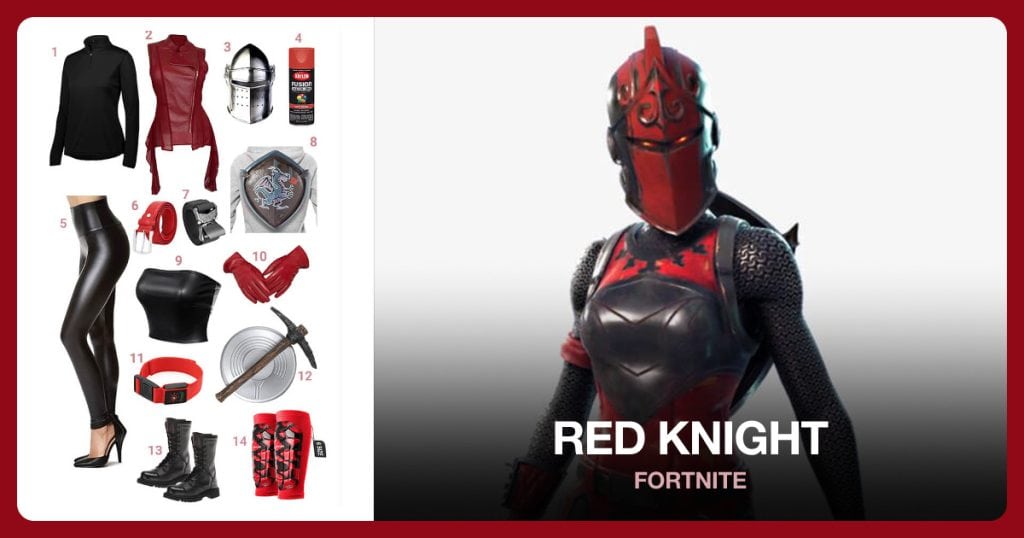
Red Knight
Black layers, red armor-style accents and a visor create Fortnite’s distinctive knight.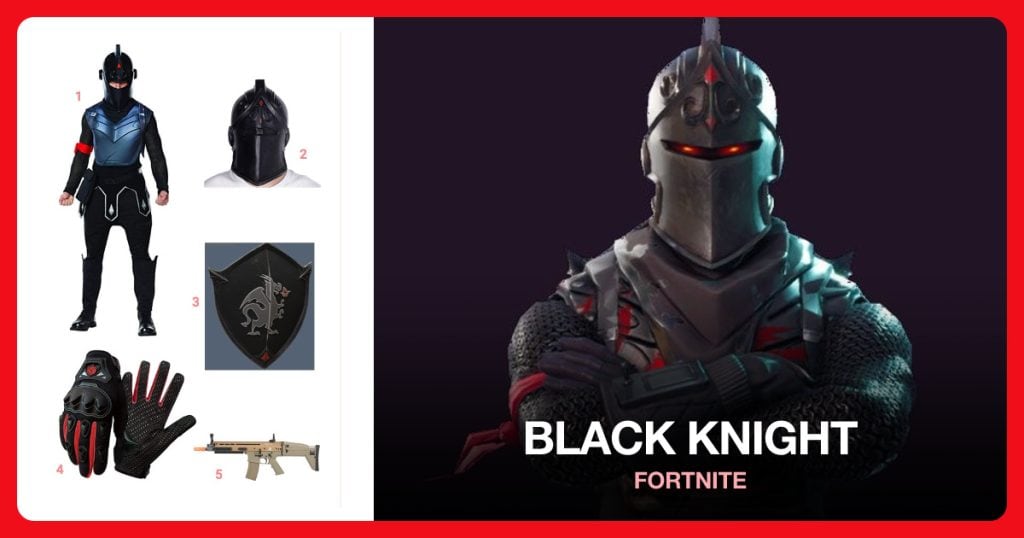
Black Knight
A dark costume set and helmet bring the knight silhouette into Fortnite.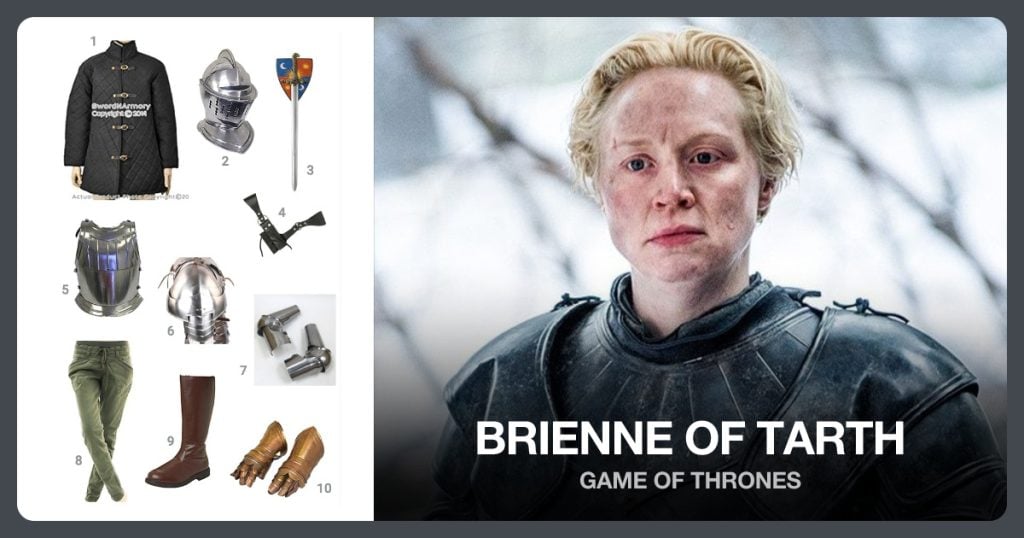
Brienne of Tarth
Layered armor-style pieces and boots make a Game of Thrones knight alternative.What Do You Need for a DIY Knight Costume?
Choose a tunic or armor-style top
For the chainmail versions, use a metallic-knit tunic and cowl for an armor effect without rigid pieces. For the blue look, choose a ready-made blue tunic. A light gray long-sleeve cotton T-shirt is the simpler base for the red-cape version.
Set out dark lower layers
Use black trousers, dark trousers or leggings that let you walk and sit comfortably. Black dress pants suit the two trouser-based looks, while black leggings are an option for the tunic outfits. Your own plain dark bottoms work just as well when they have no distracting logos.
Pick boots and one cape
Tall black costume boots give a more dramatic medieval profile; brown lace-up combat ankle boots are a shorter everyday alternative. Choose either the blue hooded medieval cloak or the burgundy hoodless medieval cape. The blue cloak is shorter and hooded, so wear its hood down if you prefer an open, face-visible look; the burgundy cape is darker than bright red.
Add waist and arm details
A brown Medieval Leather Belt gives the tunic a defined waist and a hanging belt end. Silver SUMGOGO costume bracers can add a light armor cue to the blue-tunic outfit. The elope silver plush knight helmet is optional for a playful prop-like finish, but leaving it off keeps the face visible and makes eating, talking and photos easier.
How to Make a Knight Costume, Step by Step
Start with the clothes, fit the identifying details and check the finished outfit before you leave.
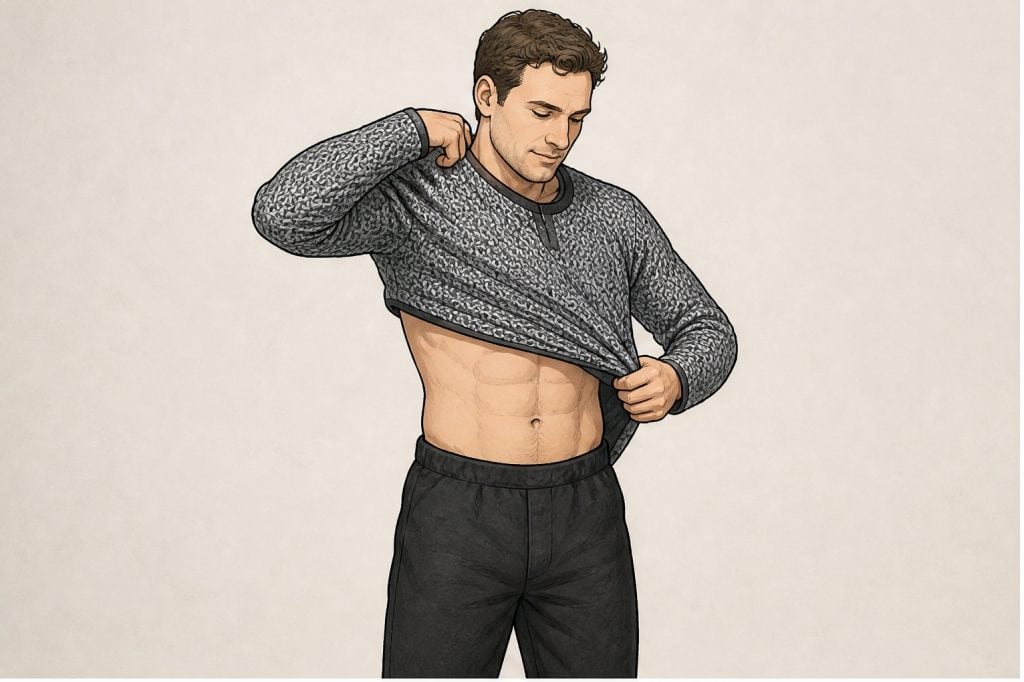
1. put on chainmail-print tunic and dark trousers
Start with the tunic or gray chainmail-print layer over dark trousers or leggings. Pull the tunic hem straight, then adjust the lower layer so it does not bunch at the knees or show unevenly below the tunic. If using the plain gray long-sleeve shirt version, treat it as the same clean, neutral base.
Try a few long steps and sit down before adding accessories. A tunic can be loose, but it should not catch under your feet when you climb stairs. If it feels too long, position the belt slightly higher at the natural waist rather than folding a bulky amount of fabric underneath.
Check: The upper and lower layers look smooth, feel comfortable, and allow you to walk without pulling.
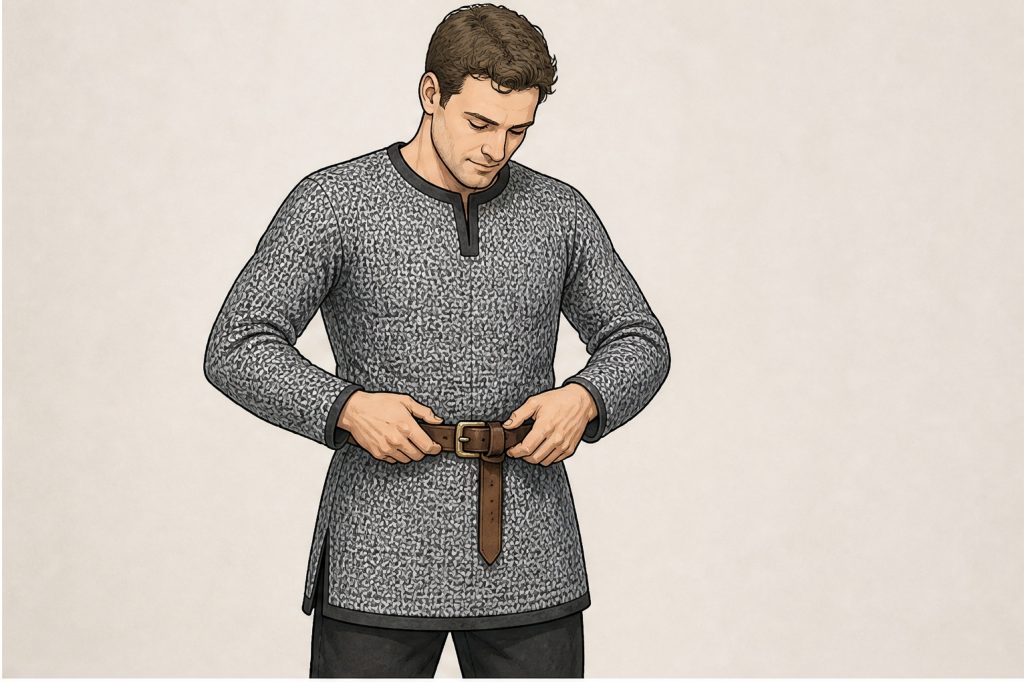
2. fasten brown belt
Wrap the brown belt around the tunic at your natural waist or a little above it, then fasten it firmly enough to stop the tunic from shifting. Let a short section of belt hang down for a medieval-inspired line, or tuck the excess neatly if a dangling end would be inconvenient.
For an optional period-inspired arrangement, watch the linked belt-tying video and use its hanging-end idea with your costume belt. It is a finishing option, not a required project: an ordinary buckle belt works well, and no sewing or special buckle is needed.
Check: The belt stays centered when you raise your arms, and its loose end cannot catch under your hand or feet.
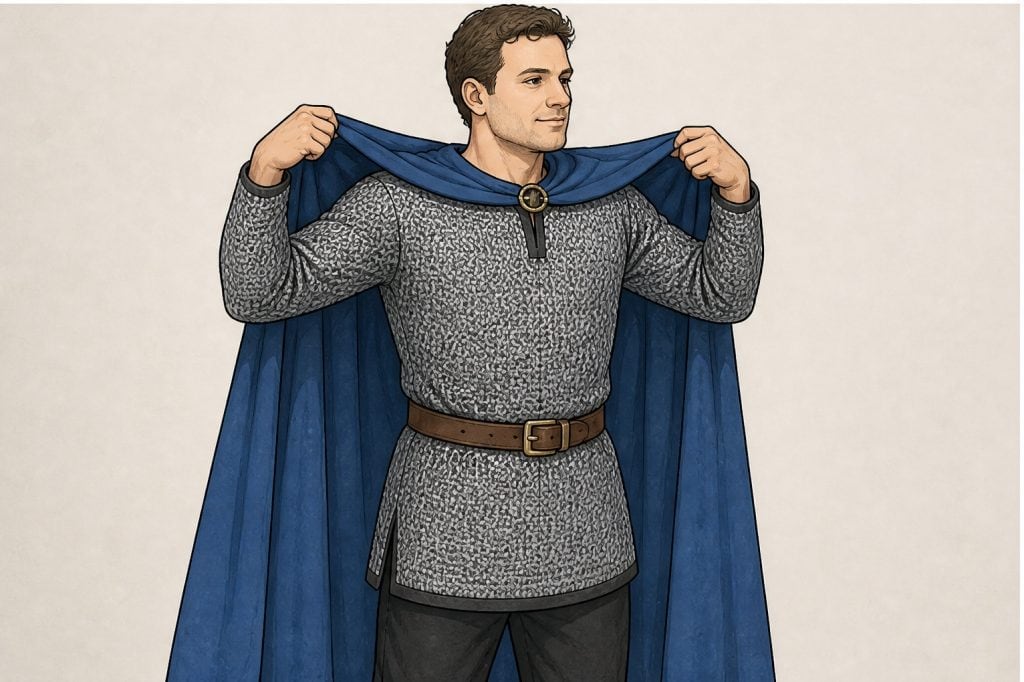
3. drape blue cape
Place the blue cape over both shoulders after the belt is secure, then close or tie it at the neckline according to its fastening. Keep the hood down for the Cloaked Knight look so the face remains visible. For the Red Cape Knight variation, use the burgundy hoodless cape instead of the blue one.
Spread the cape fabric evenly across the back rather than leaving it twisted on one shoulder. If the neckline feels tight, loosen the closure slightly and let the cape rest farther back on the shoulders. Do not pin through delicate knit fabric unless you have tested the attachment first.
Check: The cape hangs evenly from the shoulders, clears the belt, and does not pull at your neck.
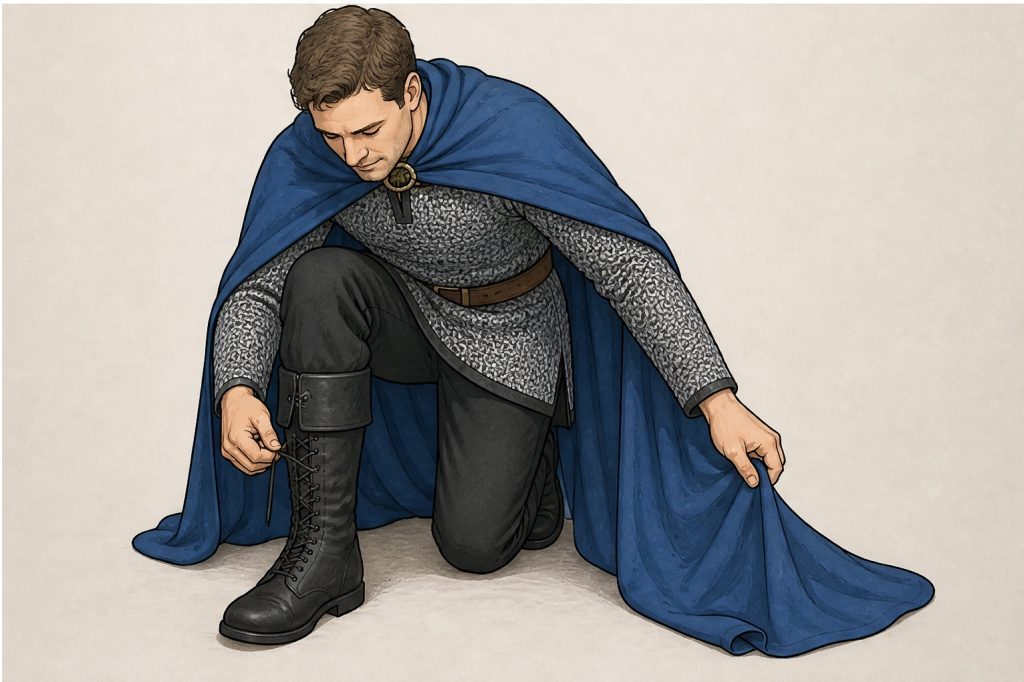
4. lace boots and check cape hem
Put on the boots last and lace or zip them fully before checking the cape length in a mirror. Wear the black tall costume boots for a stronger knight outline, or use brown ankle boots when comfort and everyday wear matter more. Move the cape hem behind your legs before walking.
Take several steps, turn around, sit briefly and go up one stair if possible. The cape should not slide under your heels or drag where it could be stepped on. If it is long, gather a little fabric over one forearm for walking and release it again for photos.
Check: Your footwear feels secure, the cape hem stays clear of the ground, and you can move naturally.
Knight Armor, Cape & Finishing Touches
Keep the finishing details simple and visible. The tunic, belt and cape already establish the costume, so use bracers, a helmet or a small emblem as optional additions rather than covering every surface with accessories.
Keep the face open
Wear the blue cloak with its hood down when you want the Cloaked Knight outfit to read clearly in conversation and photos. The plush silver knight helmet can be added for a lighthearted knight silhouette, but it is optional and works best for a brief entrance or posed picture rather than all-evening wear.
Use silver bracers selectively
Pair the silver costume bracers with the Blue Tunic Knight to sharpen the blue-and-silver contrast. Put them over sleeves rather than directly against bare skin if their edges feel uncomfortable. Skip them on the other looks when you want the cape and belt to remain the strongest visible accents.
Make the cape color do the work
Blue gives the costume a cool classic-fantasy feel, while the linked hoodless cape is burgundy, a deeper substitute for a bright red cape. Choose one cape color per outfit. A plain tunic with a strong cape is clearer than competing blue, red and silver accessories all worn together.
Add one removable heraldic detail
If you want a small extra project, attach a removable fabric-safe blue or red patch to the cape or tunic after testing it on an inconspicuous area. A simple shield shape or stripe is enough. This is optional decoration, not part of the easy no-sew baseline costume.
Four Knight Outfit Ideas
Choose one starting point and reuse the clothes you already have. Each card keeps its suggested shopping pieces together; photo styling and the linked alternatives may differ.
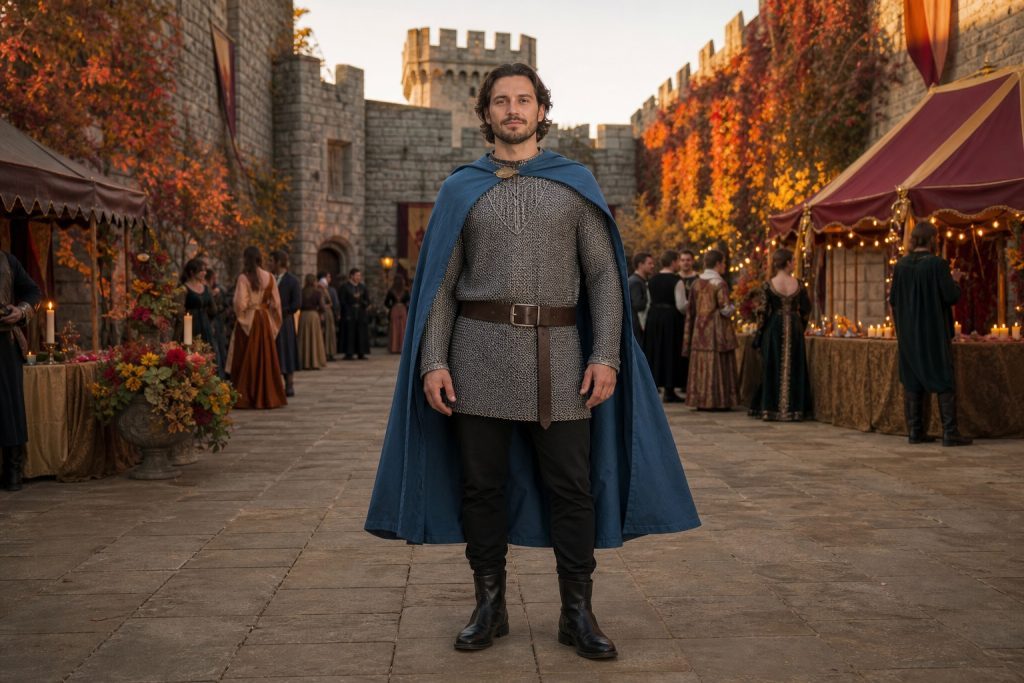
Chainmail Knight
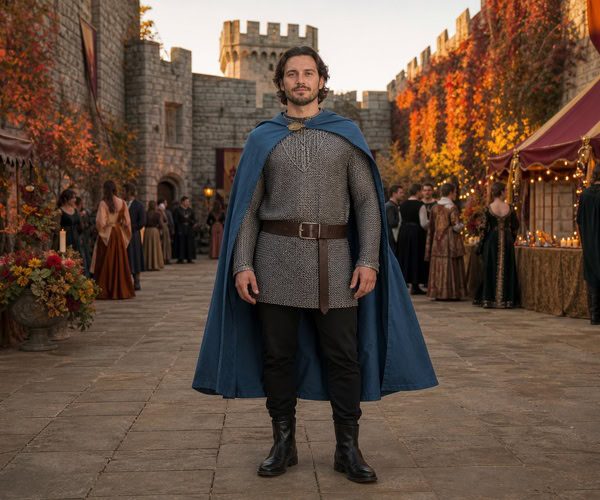
Wear a gray chainmail-print tunic over black trousers with black boots, then add a blue cape and brown belt. The metallic knit layer supplies the armor-like texture while the dark base keeps the silhouette clean. Let the blue cape sit behind the belt so its color is visible without hiding the tunic.
Shop This Outfit
Amazon · Items sold separately
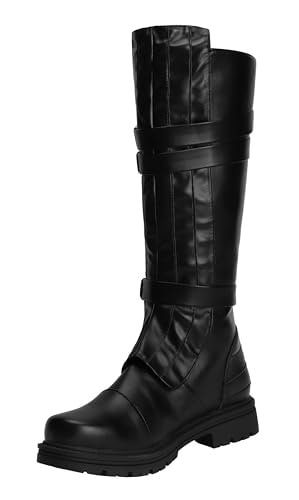 Black Costume Boots
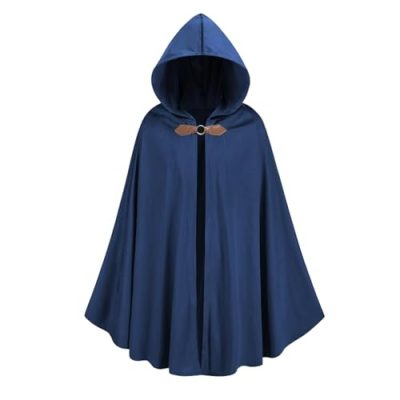 Blue Hooded Cloak
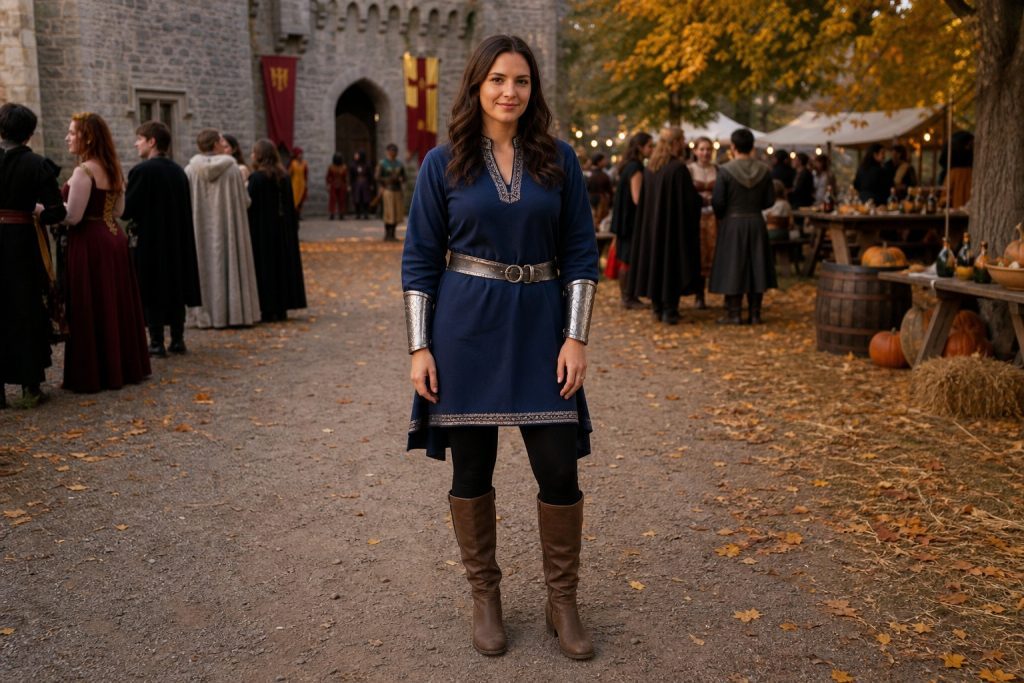
Blue Tunic Knight
Build this version with a blue medieval tunic, black leggings, brown boots, silver costume bracers and a belt. The blue fabric is the main identifier, while the silver bracers give the arms a simple armor-style accent. Brown ankle boots are shorter than the tall boots shown in many knight images, but are easier for extended wear.
Shop This Outfit
Amazon · Items sold separately
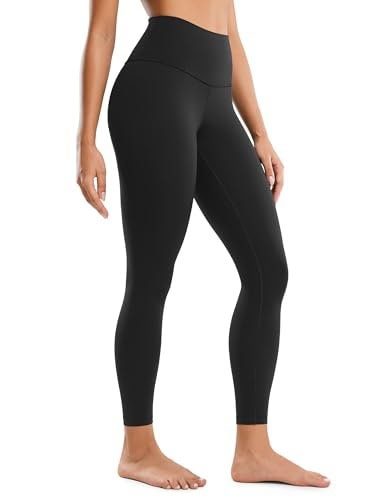 Black Leggings
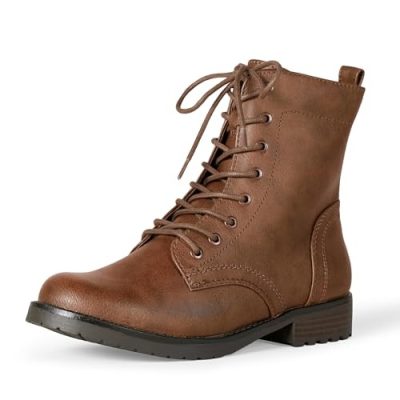 Brown Ankle Boots
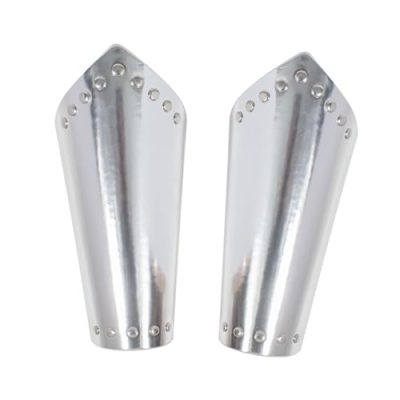 Silver Costume Bracers
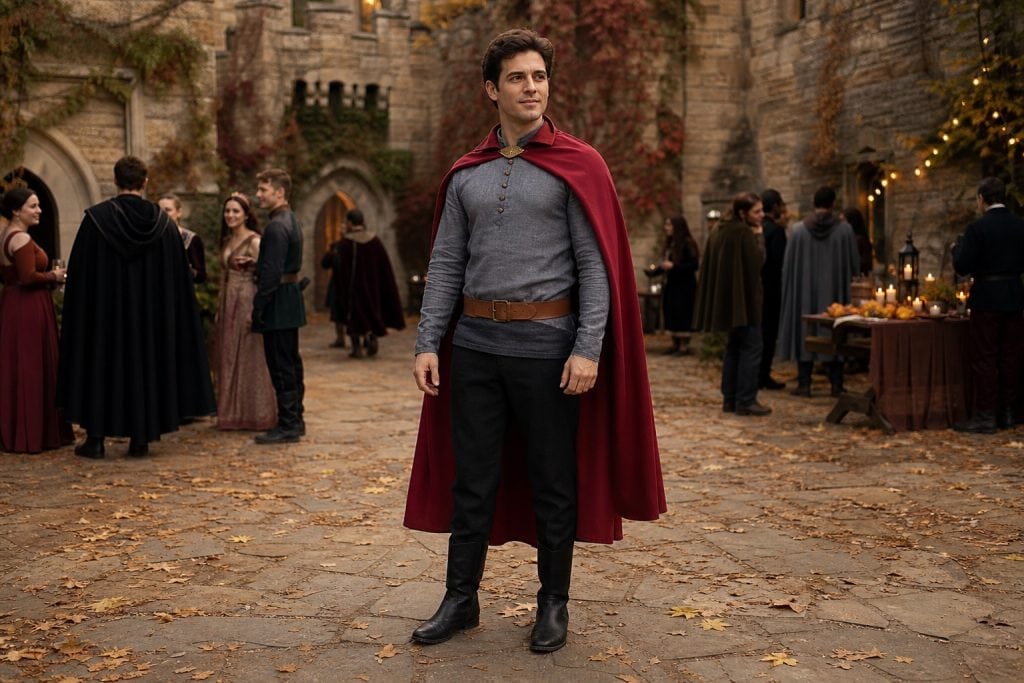
Red Cape Knight
Use a gray long-sleeve shirt with dark trousers, black boots, a brown belt and a red cape for a stripped-back knight costume. The available hoodless cape is burgundy rather than bright red, creating a darker, richer alternative. Keep the shirt plain so the cape becomes the visible color statement.
Shop This Outfit
Amazon · Items sold separately
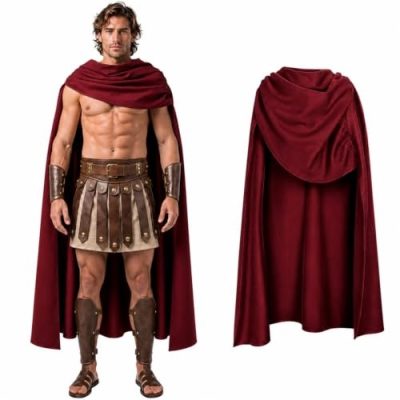 Red Hoodless Cape
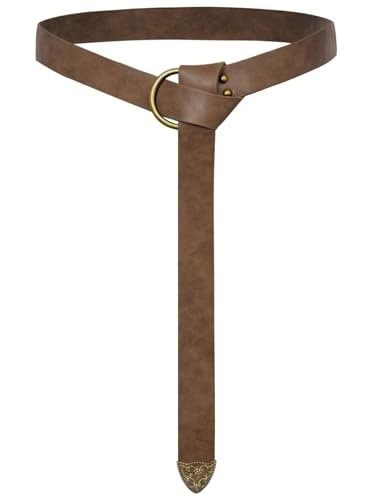 Brown Medieval Belt
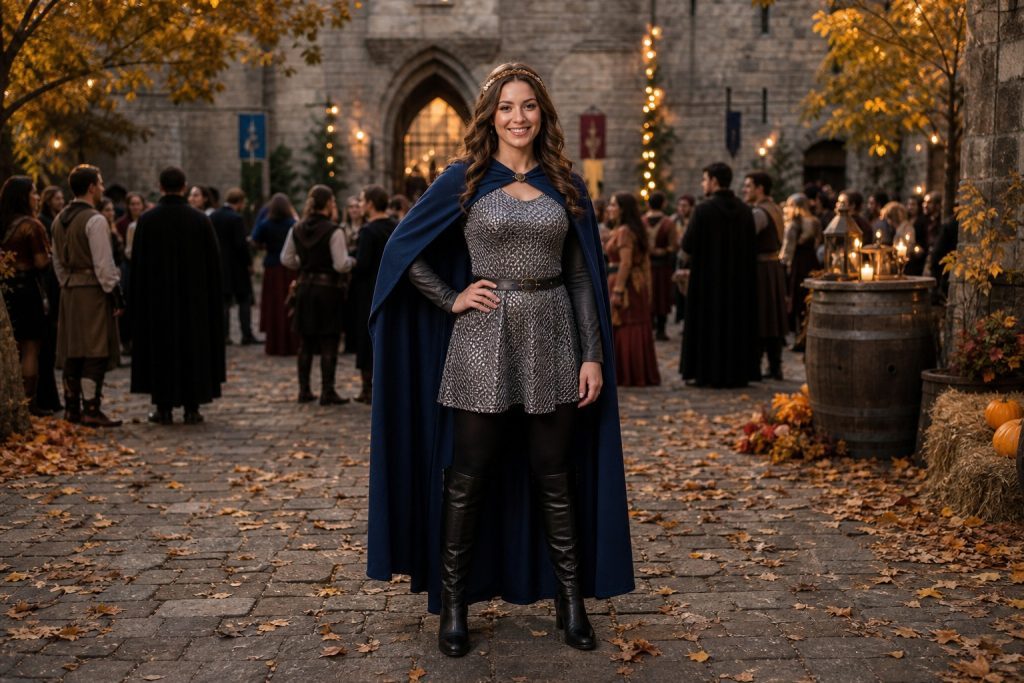
Cloaked Knight
Pair a gray chainmail-print tunic with dark leggings and boots, then drape a blue cape with the hood down and your face visible. This version has the strongest travel-ready silhouette because the cloak frames the metallic texture. Adjust the belt beneath or over the cape opening only if it helps the fabric stay centered.
Shop This Outfit
Amazon · Items sold separately
Ready-Made Knight Options
These are starting pieces; add only the details your chosen look needs.
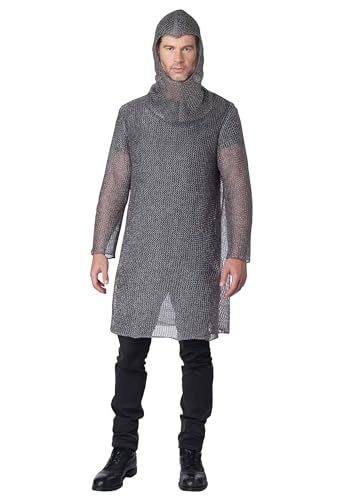
Metallic Chainmail Tunic
Start with metallic chainmail tunic. Metallic knit tunic creates the chainmail effect. Add the other clothing and accessories for your chosen outfit.
See on Amazon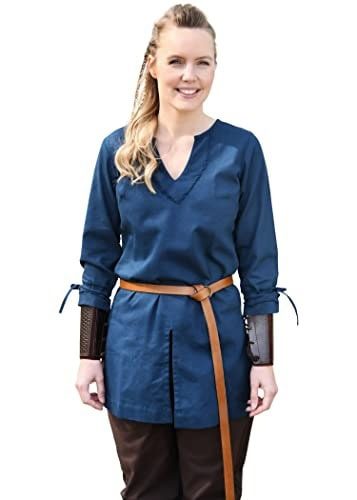
Blue Medieval Tunic
Start with blue medieval tunic. Add the other clothing and accessories for your chosen outfit.
See on Amazon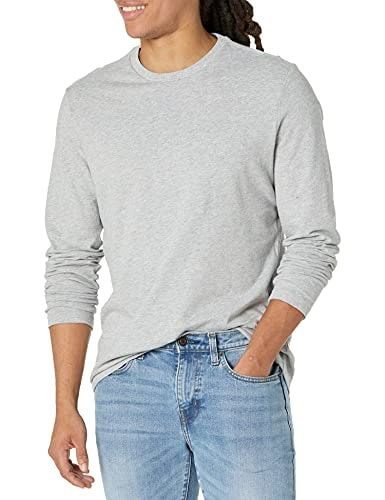
Gray Long-Sleeve Shirt
Start with gray long-sleeve shirt. Add the other clothing and accessories for your chosen outfit.
See on Amazon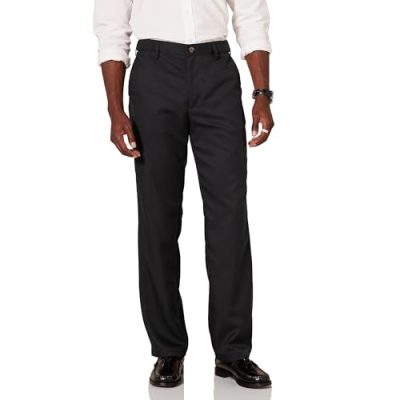
Black Dress Pants
Start with black dress pants. Add the other clothing and accessories for your chosen outfit.
See on AmazonQuick Fixes for Your Knight Costume
The tunic looks more like a shirt
Add the brown belt at the waist and let the tunic fall over dark lower layers. A belt creates the divided tunic-and-trousers silhouette that makes the outfit read as knight-inspired. Add the cape afterward, leaving the front of the tunic visible.
The cape keeps shifting sideways
Center the closure at the base of the neck, spread the fabric across both shoulders and make sure hair, a collar or bulky hood is not trapped underneath. If one side is heavier, redistribute the fabric before tightening the closure. Keep the cape outside the belt unless you need extra control.
The outfit feels too bulky
Use one armor-style cue rather than several. Keep the chainmail-print tunic, but skip the helmet or bracers; alternatively, wear the plain gray shirt with the cape and belt. The recognizable details are tunic shape, dark lower layers, boots and one cape, not heavy accessories.
The costume does not read as a knight
Make the belt and cape visible in the front-facing view. Plain gray clothes alone can look like everyday layers, while a waist belt plus a blue or burgundy cape gives an immediate medieval-inspired outline. A pair of silver bracers or a brief helmet photo can reinforce the theme.
How to Act Like a Knight
Use calm, purposeful movement rather than an elaborate performance. A few small choices make the outfit feel knightly while remaining natural at a party.
Stand with the cape clear
Keep your shoulders relaxed, stand tall and place one hand lightly near the belt when posing. Let the cape fall behind you instead of gripping it tightly.
Use a simple greeting
Offer a small nod or place a hand over your chest when greeting someone. It reads clearly without an accent, speech routine or character impression.
Pose for the silhouette
For photos, turn slightly sideways so the tunic, belt and cape can all be seen. Keep both feet planted and make sure the cape hem remains behind your boots.
Knight Couples & Fantasy Groups
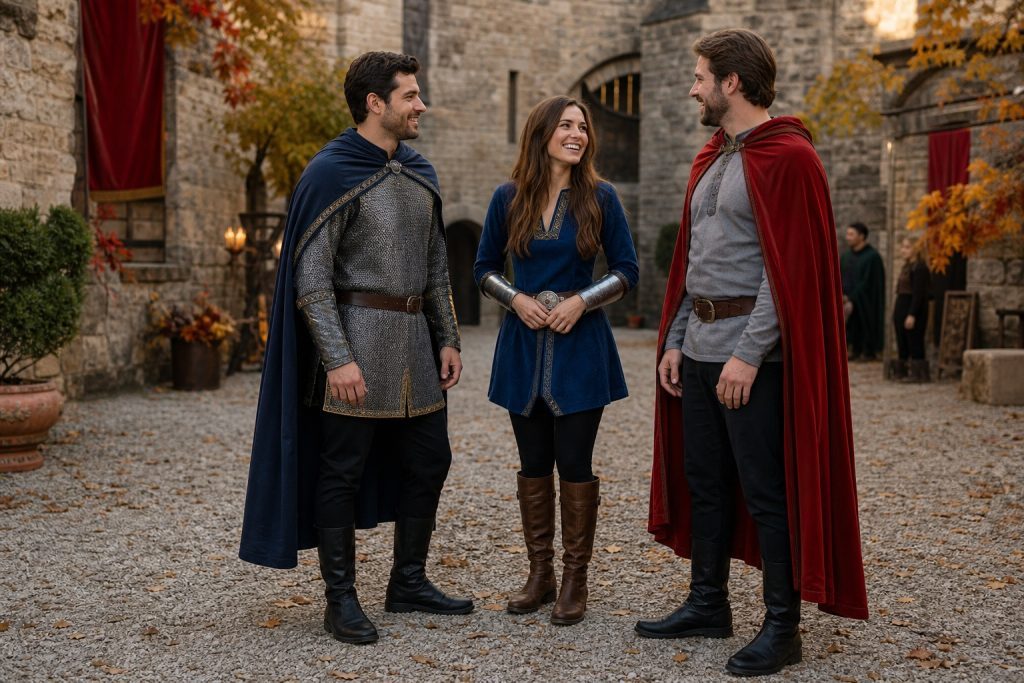
A knight group works best when everyone shares a few colors or a cape style while keeping their own base outfit comfortable. Use the classic blue, gray, black and burgundy palette as a connector, then give each person one distinct role or visual focus.
Two contrasting knights
Pair the Chainmail Knight in blue with the Red Cape Knight in burgundy. One person can wear the metallic-knit tunic and the other a gray shirt, creating two different levels of armor-style detail without requiring matching costumes.
Knight and royal companion
One person wears a blue or burgundy cape over the knight layers, while the companion uses a simple long dress, robe or dark formal clothing already in their closet. Repeat one color, such as blue ribbon or burgundy scarf, so the pair looks intentional.
A four-knight party
Assign one person to each outfit card: chainmail blue, blue tunic, red cape and cloaked blue. Keep belts and boots practical rather than identical. The different cape and tunic colors make the group readable in photos while allowing everyone to choose their own fit.
Knight Costume Tips & FAQs
What details make a knight costume recognizable?
A tunic-like upper layer, dark lower layers, a belt, boots and a cape create the clearest combination. Chainmail print, silver bracers and a helmet are useful optional cues, but the cape-and-belt silhouette does most of the visual work.
Can I make this costume from existing clothes?
Yes. Start with a gray, blue or black long-sleeve top, dark trousers or leggings, and boots you already own. Add a belt and a scarf, blanket-like wrap or existing cape if available. The suggested items are alternatives for filling gaps, not a complete required purchase.
Which cape color should I choose?
Choose blue for the classic cool-toned knight looks or burgundy for the Red Cape Knight variation. The supplied red-cape alternative is burgundy, so it will look deeper and less bright than a vivid red reference. Use one cape color at a time for a clear result.
How can I keep the cape comfortable all evening?
Make sure the neck closure is not tight, distribute the fabric evenly over both shoulders and check that the hem stays behind your boots. A shorter cloak is often easier for walking. Keep the hood down if it bunches at the neck or blocks your view.
Do I need a helmet or real armor?
No. The costume reads well with a tunic, belt, cape and boots alone. The plush helmet and silver bracers are optional finishing pieces for photos or a more armor-like feel. Avoid rigid, heavy additions if they make sitting, talking or moving uncomfortable.
What can I wear instead of tall costume boots?
Use dark lace-up boots, combat boots or other sturdy-looking footwear you already have. The brown ankle boots suggested for the Blue Tunic Knight are intentionally a shorter alternative to tall boots. Keep the footwear plain enough that the tunic and cape remain the focus.
About Knight Costumes
The knight costume draws on a widely recognizable medieval-inspired outline: an upper tunic layer, a waist belt, dark legwear, boots and a draped cape. It does not need historical armor or a strict reenactment approach to work as a clear party costume.
Build around practical layers
Soft knit chainmail print and ordinary clothing keep this costume lighter than rigid costume armor. The tunic can be a purchased medieval-style garment or a plain long-sleeve shirt adapted with a belt and cape, making the idea flexible for different budgets and closets.
Use color as the visual signal
Blue and gray create the classic knight options in this guide, while burgundy introduces a darker red-cape variation. Silver bracers can suggest armor-style contrast, but they are not necessary. Clear color blocking and a secure cape are more useful than adding many small accessories.
Make the Knight Costume Yours
Choose one outfit card, start with the comfortable tunic-and-dark-layers base, then add the belt and one cape color. Check the boots and cape hem before leaving. Once the silhouette is clear and easy to move in, you have a practical classic knight costume ready for photos, parties and group looks.