











Choose the reference before choosing the wig
A Rumpelstiltskin costume can mean a pale-haired figure in a patterned tailcoat, a red-haired dealmaker from Shrek Forever After, or Robert Carlyle’s textured, dark fairy-tale wardrobe in Once Upon a Time. The name connects them; the clothes do very different jobs.
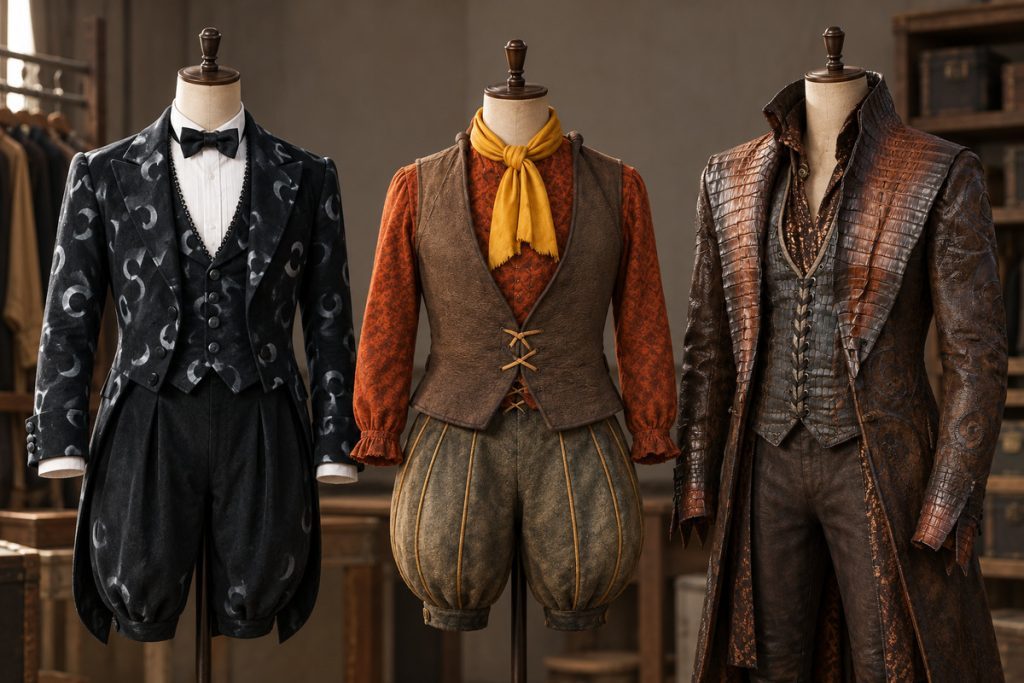
That matters when you start collecting pieces. A black bow tie belongs with the tiptoe look’s white shirtfront. A yellow scarf and short brown vest point toward Shrek’s version. A raised collar and reptile-like texture take you toward the television character.
Use this comparison to choose a complete direction for Halloween. Then spend your effort on the hair, neckline, and main garment that identify that version, rather than buying every accessory associated with the name.
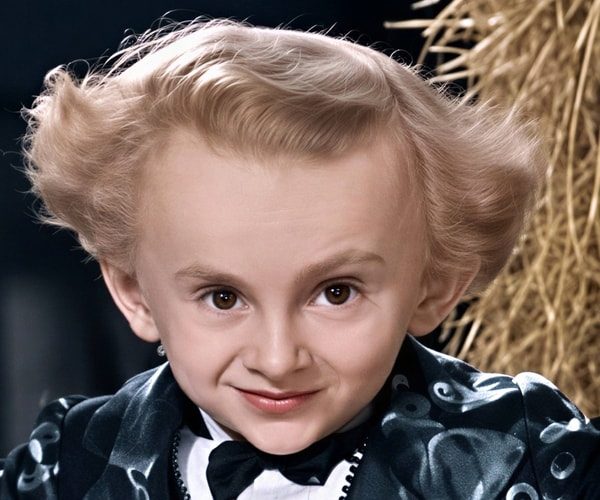
The tiptoe look: formal clothes with a mischievous twist
The meme outfit gets much of its character from contrasts. The white shirt and neat black bow tie suggest formal dressing; swept-back hair, flared sides, and a pale-patterned dark jacket make it stranger. In a full outfit, the cropped trousers, long coat tails, and curled shoe points continue that storybook shape.
Keep the shirtfront and coat together
A dark jacket alone is easy to mistake for ordinary eveningwear. Leave a clear patch of white shirt beneath the bow tie and keep the coat’s split tails visible. The pale, irregular curling marks distinguish the reference further, but the formal outline should make sense before you add them.
Let the hair frame an open forehead
This is a swept-back shape with outward sides, not a round blond cloud or a straight fringe. Our Rumpelstiltskin costume guide includes the clothing kit and optional wig and jacket customization for this particular look.
The viral tiptoe reference is separate from the 1987 musical film. Tubi explicitly distinguishes the clip from that movie, so do not use the film’s date as the identity of this outfit.
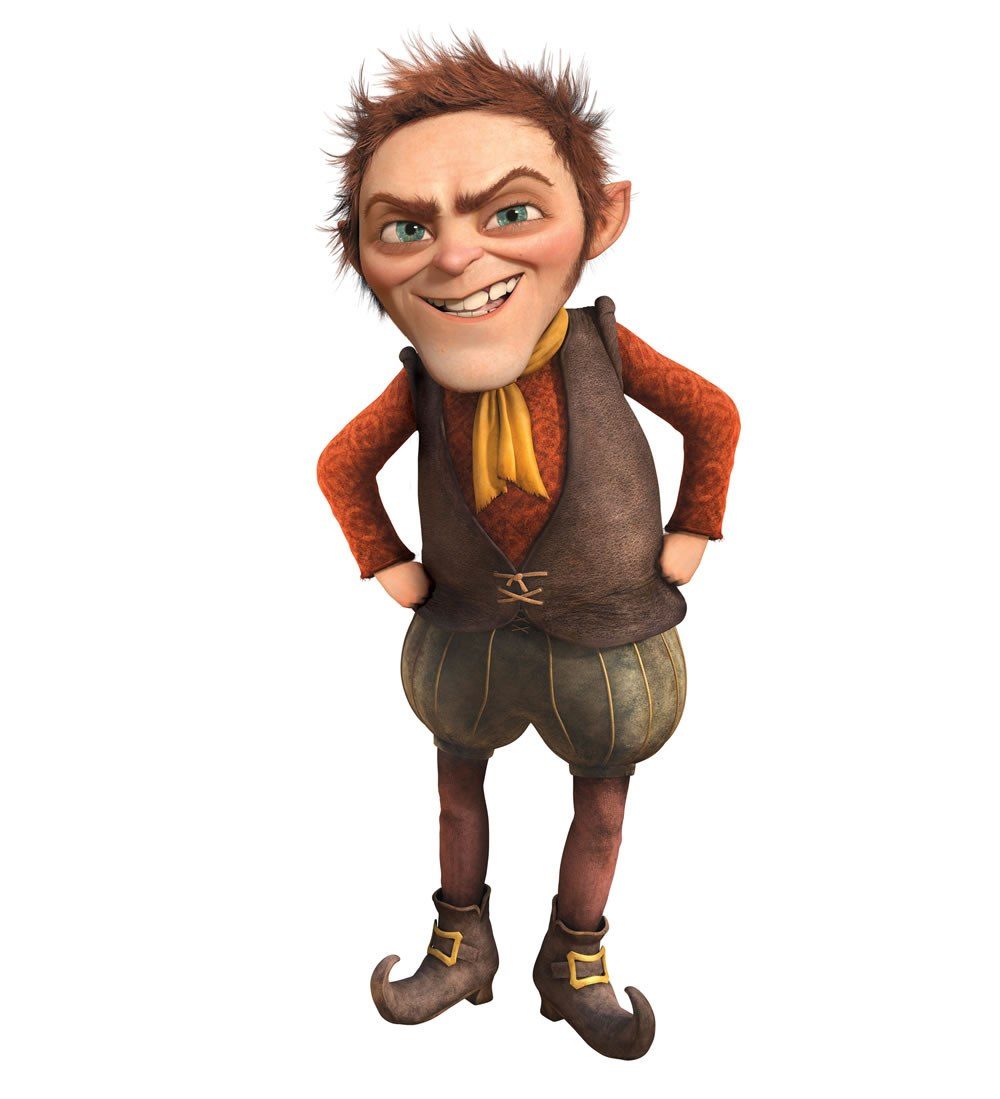
Shrek’s version: short layers and a bright scarf
DreamWorks places Rumpelstiltskin at the center of Shrek’s deal in Shrek Forever After. In the character artwork shown here, his outfit is built from a rust-red shirt, a thick brown vest with lacing, a yellow neck scarf, striped short trousers, and curled shoes.
Make the vest visibly shorter than a coat
The brown vest frames the front of the shirt while leaving the warm-colored sleeves exposed. A long black tailcoat would change that balance immediately. If you are assembling an approximation, settle the shirt, vest, and scarf as one group before working on the trousers.
The scarf is a small piece with a large visual job: it puts a bright yellow accent directly under the face. Replacing it with the tiptoe outfit’s black bow tie would mix two otherwise distinct references.
Use the hair color as another clue
The short, swept-up reddish hair in this artwork differs from both the pale tiptoe hairstyle and the television character’s longer dark waves. Keep that color and outline connected to the warm clothing. You can suggest the animated design through those choices without trying to reproduce the character’s exaggerated proportions.
Choose a specific image if you want another outfit from the film. The brown-vest reference here is one look, not a promise that he wears exactly these clothes in every scene.
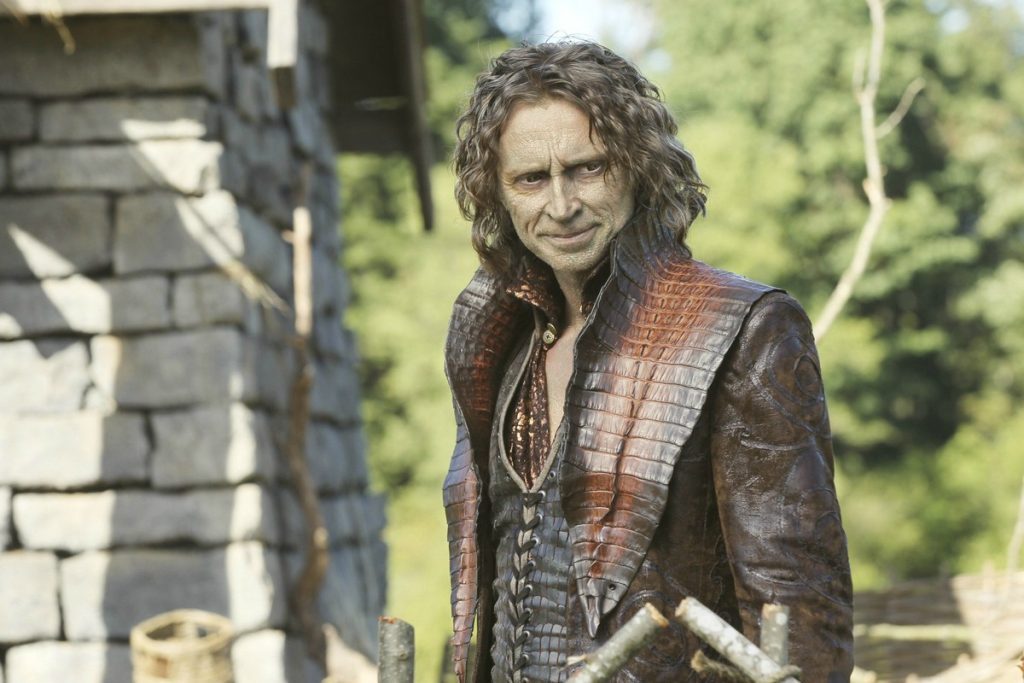
Once Upon a Time: texture around the face and chest
Disney+ identifies Robert Carlyle’s character as Rumplestiltskin and Mr. Gold. For the fairy-tale outfit pictured here, the strongest clothing clues are the raised collar, dark brown tones, uneven surface texture, and fitted layers across the torso.
Choose a textured focal garment
A plain black suit does not create the same effect as this coat. The large collar panels carry a reptile-like pattern, while the front layers add lacing and smaller shapes. Succubus Studios’ production gallery includes several Rumpelstiltskin coats and a vest, making it a useful visual reference for comparing garments rather than assuming one universal outfit.
For a personal costume interpretation, begin with one convincing collar or textured outer layer. Keep nearby pieces quieter so that detail remains visible. A patterned fabric or faux-leather finish can suggest the idea, but an ordinary smooth jacket will remain a different approximation.
Decide between fairy-tale Rumple and Mr. Gold
Disney+ distinguishes the fairy-tale dealmaker from his Storybrooke businessman identity. Decide which one you mean before mixing a suit-based outfit with the textured fantasy coat. Use an image of that chosen identity as your clothing reference.
The longer dark hair and gold-toned face also make the pictured fairy-tale version different from the other two looks. They support the clothing; they do not turn an unrelated coat into the same costume.
Keep the details in the same costume
Start with three decisions: the main garment, the neckline, and the hair. You can simplify individual pieces while keeping those choices coherent.
If you want the tiptoe reference
- Choose a formal tailcoat shape and a visible white shirtfront.
- Keep the black bow tie small and centered.
- Use swept-back pale hair with outward side flares.
- Treat the pale jacket marks as a separate customization step.
If you want the Shrek reference
- Build the warm red-and-brown shirt and vest combination.
- Keep the yellow scarf visible at the neck.
- Choose the short, swept-up reddish hair from that reference.
- Look at the trouser and shoe shapes after the upper outfit works.
If you want the fairy-tale television look
- Make the raised collar and textured coat the focal point.
- Choose a particular coat-and-vest combination from a clear image.
- Keep its dark hair and layered neckline together.
- Decide separately whether you want the gold-toned face detail.
What you can simplify
Start with the biggest visible difference. A plain tailcoat can establish the tiptoe outline before its decoration; a warm-colored shirt and scarf can establish the Shrek palette before exact trousers. For the television version, a strong collar deserves more attention than a barely visible accessory.
Use one reference image for your main shopping decisions. A folder full of different adaptations makes it surprisingly easy to buy the right piece for the wrong costume.
Use the matching guide for the tiptoe look
Our existing Rumpelstiltskin guide follows the pale-haired tiptoe reference. Its kit, dressing order, hair shaping, and optional jacket decoration are designed around the tailcoat outfit.
Open it if that is the version you chose. For Shrek or Once Upon a Time, use the comparison above and the linked original references to plan a separate outfit; do not assume the tiptoe shopping kit supplies those clothes.
Before restyling any wig, our Halloween wig fitting guide can help you settle the cap position. Shape the hairstyle after that fit is established.
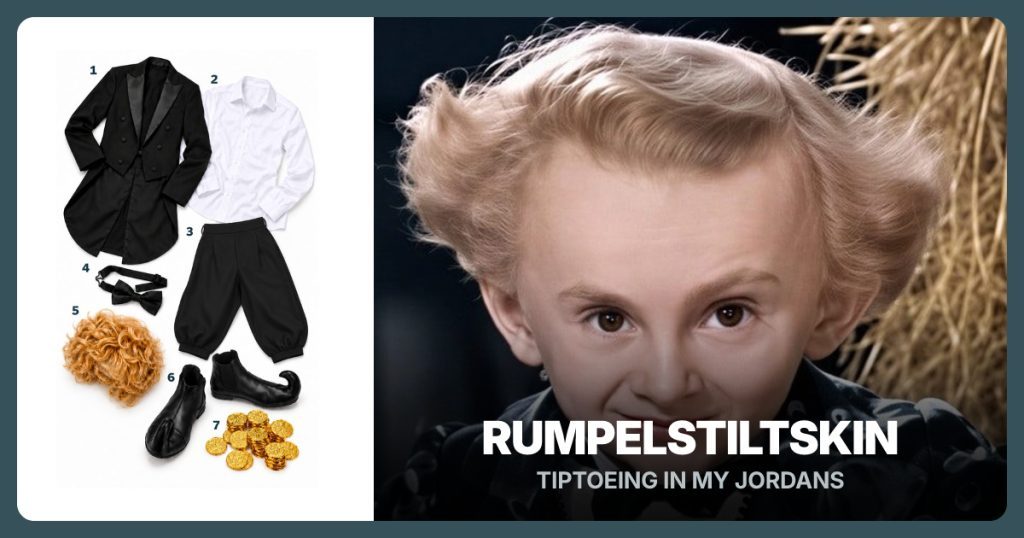
Rumpelstiltskin
Follow the pale-haired tiptoe outfit with the tailcoat, white shirtfront, bow tie, and optional hair and jacket customization.Take a photo before adding more
Use our costume photography guide to make the hair, neckline, and clothing detail clear. Check both a close-up and a full-outfit view.
A bright scarf, white shirtfront, or raised collar should remain visible when you pose. Keep props from covering the detail you worked hardest to establish.
Rumpelstiltskin costume questions
Which Rumpelstiltskin does Costume Wall’s guide cover?
The pale-haired tiptoe reference, with the dark tailcoat, white shirt, black bow tie, cropped trousers, and curled shoes. It is a separate outfit from the Shrek and television versions discussed here.
Is the tiptoe outfit from the 1987 film?
Do not label it that way. Tubi distinguishes the viral clip from the 1987 musical. Choose the tiptoe reference itself when planning that costume.
What identifies Shrek’s version most quickly?
In the artwork above, start with the reddish hair, warm shirt and brown vest, and yellow scarf. Those head-and-chest details separate it from a formal black-and-white tailcoat outfit.
Is Mr. Gold the same outfit as fairy-tale Rumple?
No. They are identities of the same television character, but choosing the Storybrooke businessman calls for a different clothing reference from the textured fantasy coat pictured here.
Do I need to decorate the whole tailcoat?
Build the formal outline first. The linked tiptoe guide explains an optional pale-pattern treatment for its plain starting coat. Check that guide before treating decoration as something already included with a purchased garment.
Can I use the same wig for all three looks?
Compare the actual shapes before deciding. Pale swept-back side flares, short reddish spikes, and longer dark waves are different choices. A wig’s label alone does not make it suitable for every Rumpelstiltskin costume.
Which version works with formal clothes I already own?
Look at the tiptoe outfit’s shirt, bow tie, and tailcoat first. A conventional suit jacket can suggest formality, but it will not supply long coat tails or the same proportions. Check what you actually have before choosing the version.
What should I prioritize on a limited budget?
Choose the main garment and neckline together. Then decide what the hairstyle needs. Leave smaller decorations until those pieces already point toward the same version.
References behind the comparison
The linked studios, distributor, and production maker support the identities and visual references. The outfit comparisons and planning suggestions are Costume Wall’s editorial analysis.
The meme and animated character
- Tubi: the tiptoe clip and the 1987 film — explains why those references should not be conflated.
- DreamWorks: Shrek Forever After — the animated film and Rumpelstiltskin’s role.
The television character and clothing
- Disney+: Once Upon a Time cast and characters — Rumplestiltskin, Mr. Gold, and Robert Carlyle.
- Succubus Studios: Once Upon a Time production gallery — coat and vest references.
Use the specific outfit images when comparing colors and construction; a character name does not identify a single garment.
Choose the clothes that tell your version
The useful starting point is a complete combination: pale hair and patterned formalwear, reddish hair and a bright scarf, or dark waves and a textured raised collar. Pick the version that interests you, then build its main clothing shapes before adding smaller details.
Keep that reference beside your outfit as it comes together. A white shirtfront should not disappear beneath an unrelated scarf, and a carefully chosen fantasy coat should not have to compete with another adaptation’s wig. Once the pieces tell the same story, the costume has a clear direction.